An authentication and authorization policy states how sure the system must be that a user is who they claim, and what each role may do once inside. It fixes the assurance level, the role list, the role-based access control (RBAC) matrix, the session limits, the password rules, multi-factor authentication (MFA) per role, single sign-on (SSO) federation, API key handling and the guards against privilege escalation. With it, a team can decide who gets which access, and defend that decision to an auditor.
Hand-written policies drift into defaults. Someone copies a template, keeps the sample timeouts, and nobody records why the admin role has a wildcard. Six months later the leaver path has no owner, the API keys never rotated, and the audit asks a question nobody can answer. The document reads fine; it just does not describe a decision anyone made.
What sections does an authentication and authorization policy contain?
Specira's governed default template produces nine sections, each with a production strategy, the decisions it requires and the evidence it must cite.
| Section | Depth | How it is produced |
|---|---|---|
| Authentication Method | core | Prose synthesized from discovery |
| Role List | core | Table from typed items · Role, Description, User Count |
| Full RBAC Matrix | standard | Table from typed items · Role, Entity, Create, Read, Update, Delete |
| Session Policy | standard | Prose synthesized from discovery |
| Password Policy | standard | Prose synthesized from discovery |
| MFA Requirements per Role | full | Prose synthesized from discovery |
| SSO/OIDC Configuration | full | Prose synthesized from discovery |
| API Key Management | full | Prose synthesized from discovery |
| Privilege Escalation Prevention | full | Prose synthesized from discovery |
How does Specira build the authentication and authorization policy?
The Security Analyst owns this artefact. Before it asks a single question, it reads the regulatory obligations, security constraints and governance policies already in the knowledge base, so the assurance level it proposes is anchored to the highest data classification a session touches rather than to a default. In the sample, section 1 (Assurance Levels) shows that anchor as a table, with the decision recorded against a named approver and a date. Section 2 (Authentication Strategy) turns credential rules into numbers (password length, lockout, recovery path) and retires periodic rotation as a stated decision. Section 4 (Permission Model) records why role-based access control won over relationship-based and attribute-based alternatives, then lays out the matrix with explicit cells only and no wildcard admin row.
The Red Team Critic reviews every turn, so a session policy that contradicts a data classification, or a leaver path with no owner, gets flagged before it reaches the document. Sections whose decisions are still open render as named gaps; Specira never invents a timeout to fill a cell. Every row carries provenance: who decided, when, and on what evidence, with knowledge base citations scored for confidence. The export gate measures decisions resolved, not pages written, and the deferred decisions ship listed in a gap report alongside the DOCX, Markdown and JSON exports, or the push to Confluence, Jira, GitHub or Linear.
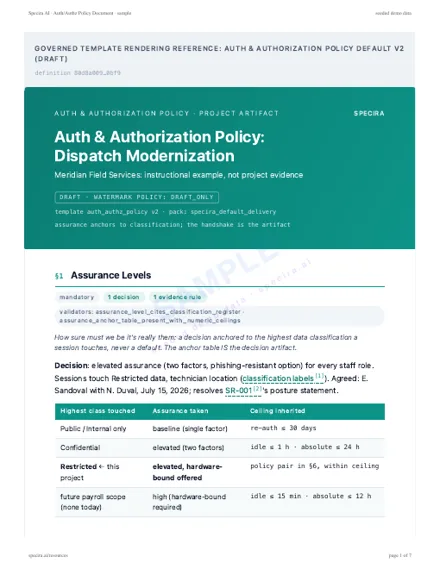
Rendered sample
Rendered from the Specira governed default template on a fictional company, watermarked, with its diagrams. Read it in the browser or take the PDF.
How do teams use the authentication and authorization policy?
- ✓Onboard the identity providerThe SSO section names the provider, the flow and the logout behaviour, so the identity team configures once and stops guessing.
- ✓Enforce the RBAC matrix server-sideDevelopers implement the matrix cell by cell, and read-only means the server denies the write, not that the button is hidden.
- ✓Answer audit questionsEach rule points at the classification, the contract clause or the regulation that demanded it, with the approver named.
- ✓Close the leaver pathLifecycle states carry an actor and a timeline, so deprovisioning has an owner before the first employee leaves.
What does the policy look like inside Specira?
These screens show the discovery session where the assurance level was argued, the typed decisions behind the matrix, and the export gate for this policy.
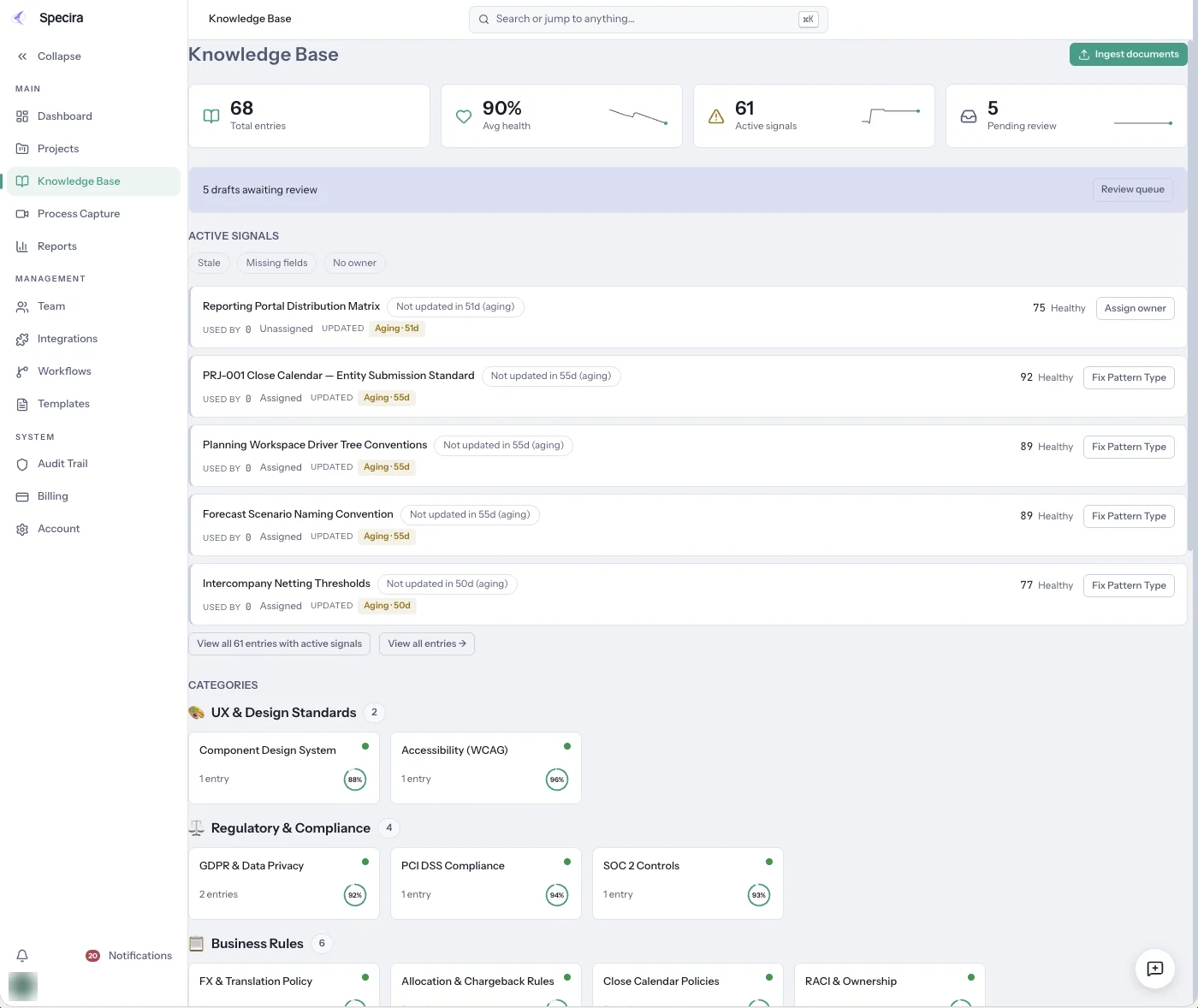
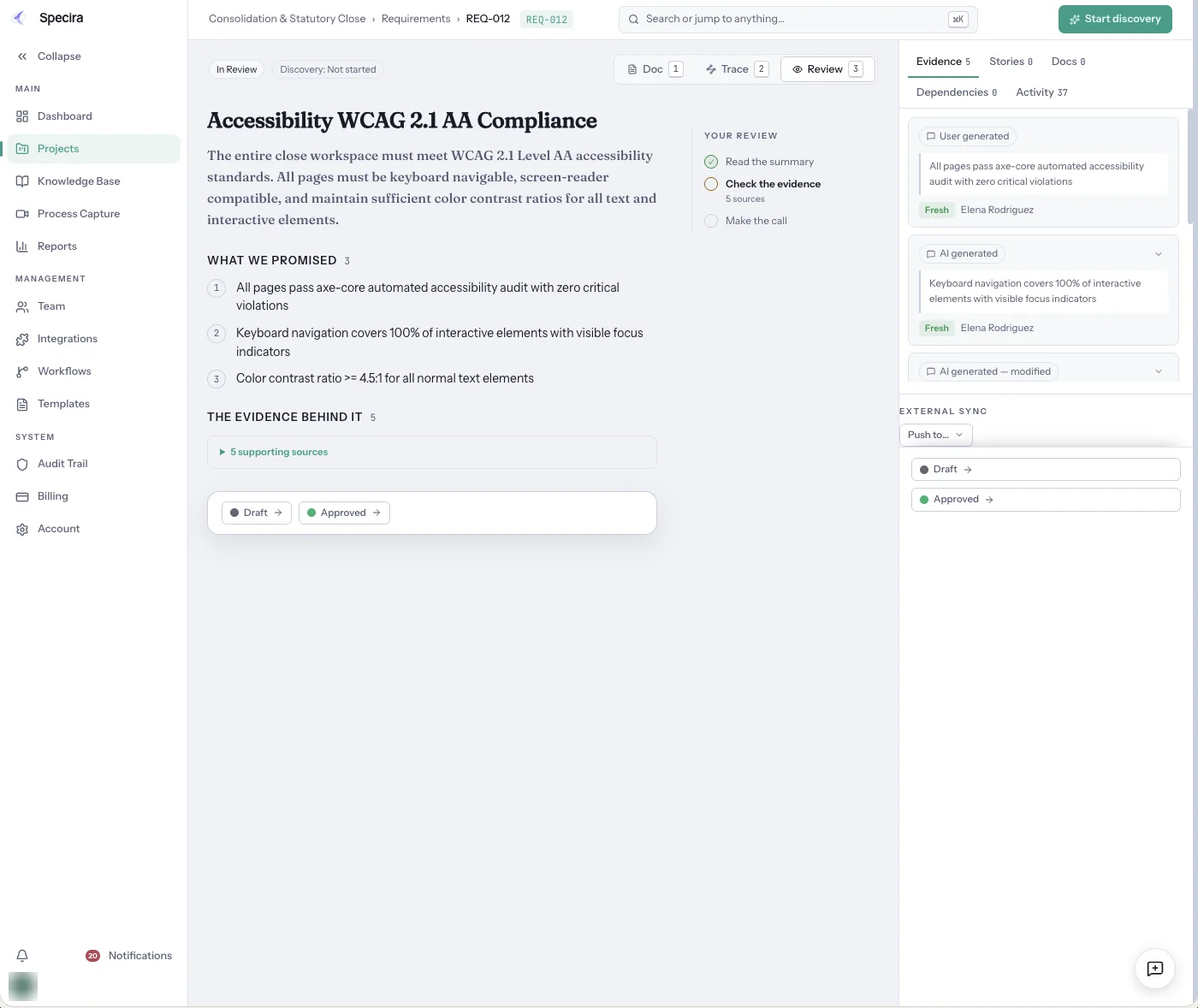
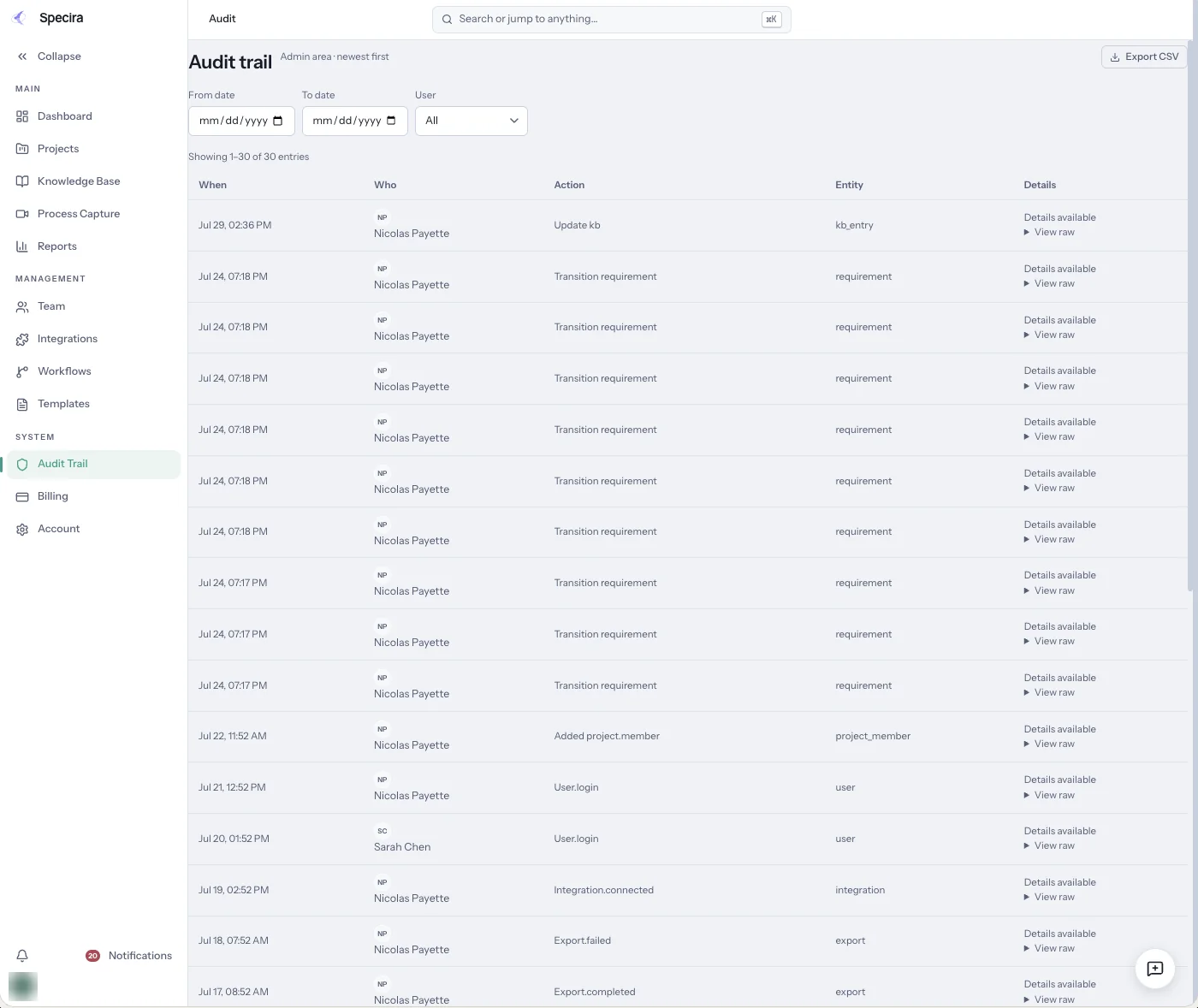
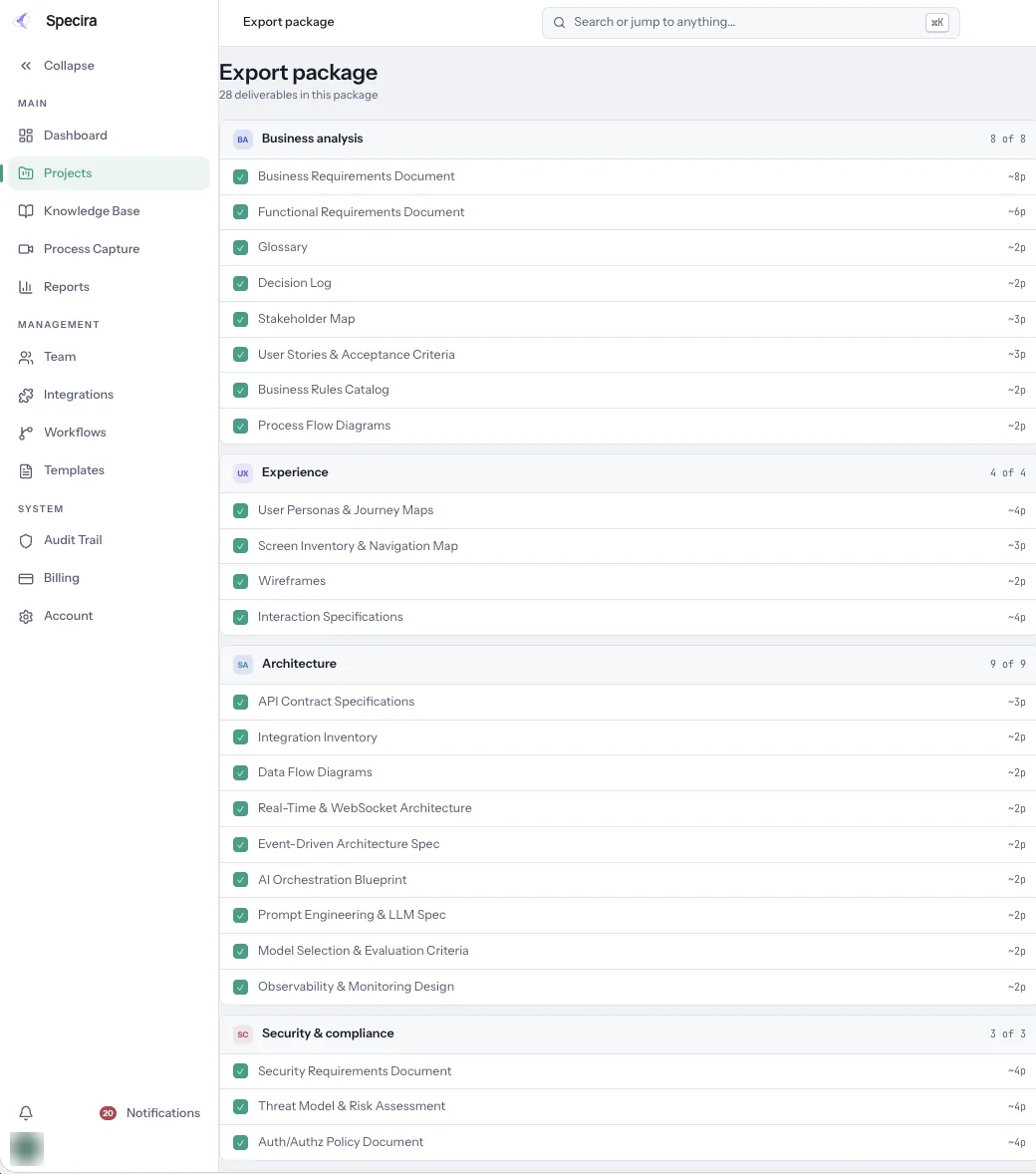
Screens are from a seeded Specira demo workspace; counts and scores are sample data.
Book a demo and watch the Security Analyst anchor an assurance level to your data classification in one session.
Book a Demo