A security requirements document is the register of verifiable security statements a system must satisfy: the authentication method and the Open Worldwide Application Security Project (OWASP) Application Security Verification Standard (ASVS) level targeted, encryption at rest and in transit, input validation, session management, cross-origin resource sharing (CORS) and content security policy (CSP) rules, secrets handling, defence-in-depth layers and an incident response playbook. It lets a team decide which controls are mandatory for this release and prove each one was verified before shipping.
Hand-written security requirements arrive as slogans. "The system shall be secure" has no driver, no test and no owner, so it survives every review untouched and gets rediscovered as an incident. Even careful teams restate the threat landscape in prose, then lose the link between a control and the threat it answers when either document changes.
What sections does a security requirements document contain?
Specira's governed default template produces nine sections, from the authentication method through the security architecture diagram to the incident response playbook, each with its required decisions and evidence.
| Section | Depth | How it is produced |
|---|---|---|
| Authentication Method | core | Prose synthesized from discovery |
| Data Encryption Basics | core | Prose synthesized from discovery |
| Input Validation Strategy | standard | Prose synthesized from discovery |
| Session Management | standard | Prose synthesized from discovery |
| CORS & CSP Policy | standard | Prose synthesized from discovery |
| Secrets Management | standard | Prose synthesized from discovery |
| Security Architecture Diagram | full | Generated diagram |
| Defense-in-Depth Layers | full | Prose synthesized from discovery |
| Incident Response Playbook | full | Prose synthesized from discovery |
How does Specira build the security requirements document?
The Security Analyst owns this artefact and reads the regulatory obligations, security constraints and governance policies in your knowledge base before it asks anything. In the sample, section 1 (Scope, Drivers and Assurance Tier) records which triggers were true (personal data, enterprise contracts, AI features) and which were false (payments, health data), so the Payment Card Industry Data Security Standard (PCI DSS) family is omitted with the reason written down rather than silently skipped. Section 2 (Security Requirements Register) is the core: one stable identifier, one testable "shall" statement, the driver cited as a threat identifier, regulation or contract clause, a verification method from a closed list, an owner role and a status. Section 3 (Data Protection and Classification) maps each data class to the rows that protect it, including retention and residency.
Every row's driver must resolve, and the template's validators reject subjective wording, so the Red Team Critic's inline notes about an evidence gap or a compliance exposure land before export. A category with no decided rows renders as a named gap, or as not applicable with a written rationale; the sample does exactly that for output encoding. Provenance sits on every row: who agreed, when, on what evidence, with the knowledge base citation and its confidence score. The export gate counts resolved decisions, ships deferred ones in a gap report, and delivers DOCX, Markdown, JSON or a push to Jira, Confluence, GitHub or Linear.
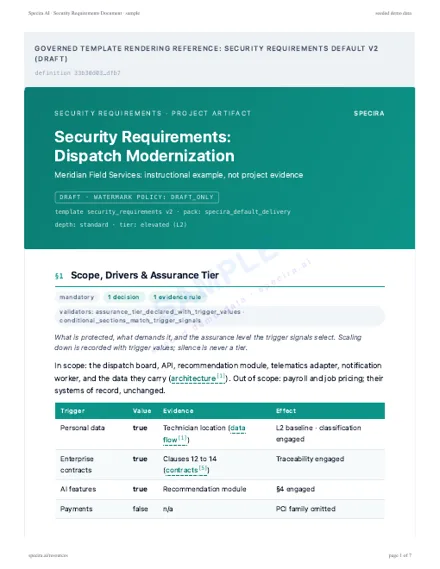
Rendered sample
Rendered from the Specira governed default template on a fictional company, watermarked, with its diagrams. Read it in the browser or take the PDF.
How do teams use the security requirements document?
- ✓Scope the assurance tierTrigger values decide which requirement families engage, so a team scaling down records why instead of hoping nobody asks.
- ✓Trace controls to threatsEach row cites the threat model entry, the clause or the baseline that demanded it, so a changed threat finds its control.
- ✓Plan verification earlyThe verification method is chosen per row (configuration, code review, dynamic test), which feeds the security test plan directly.
- ✓Walk into the audit readyOwners, statuses and drivers on one register answer most compliance questions without a slide deck.
What does the register look like inside Specira?
These screens follow a requirement row from the Security Analyst's question through the typed decision to the compiled register and its export.
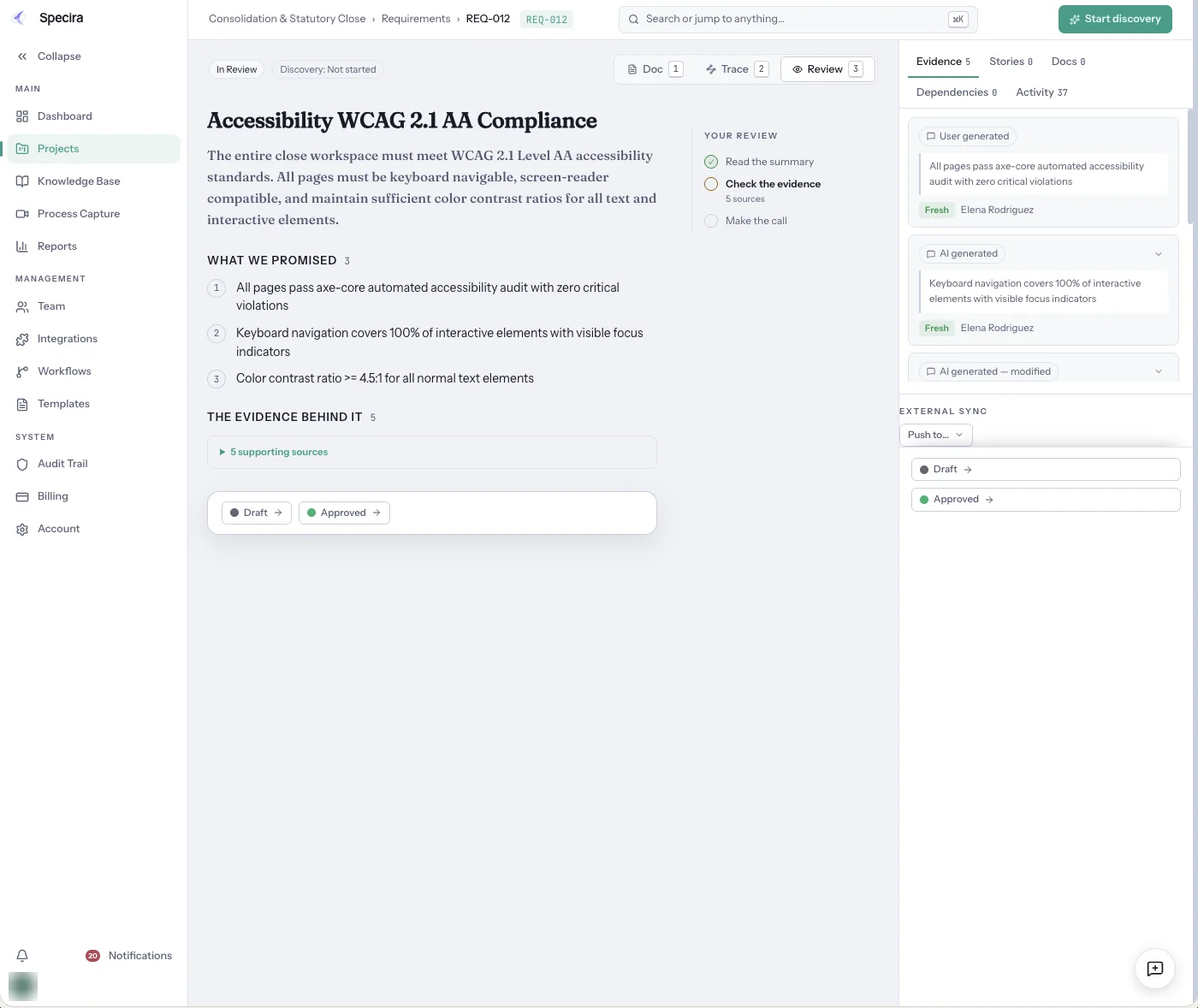
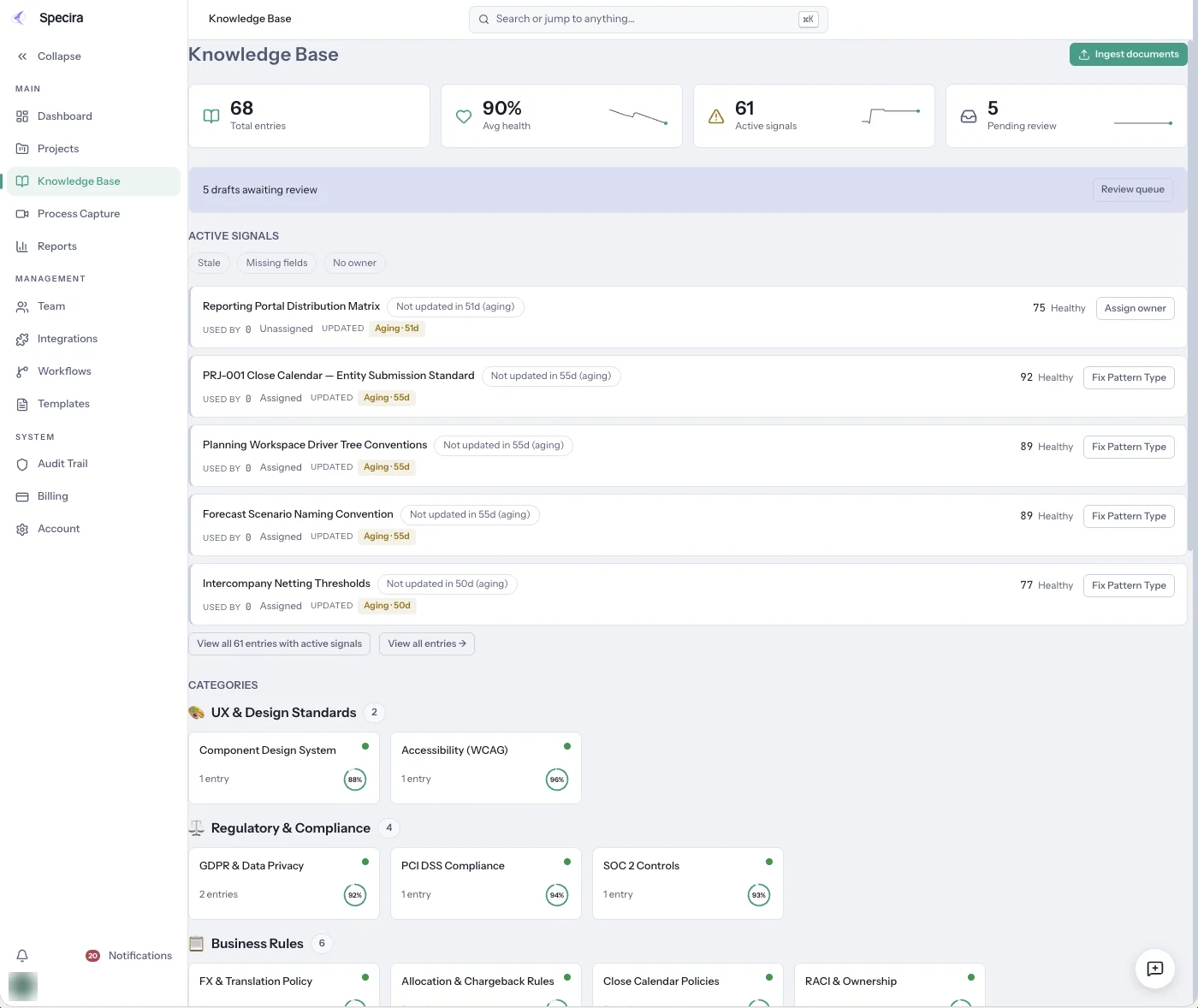
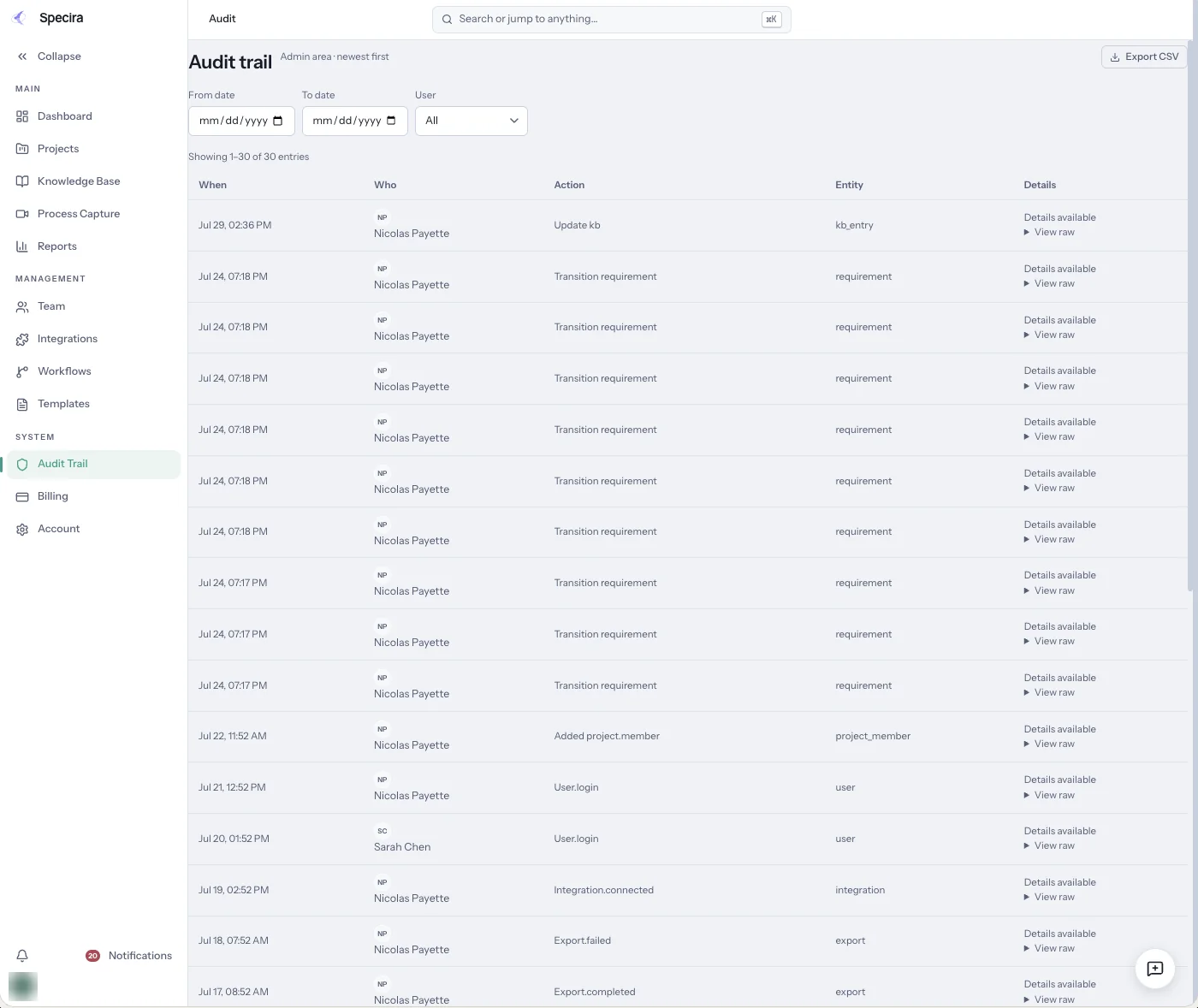
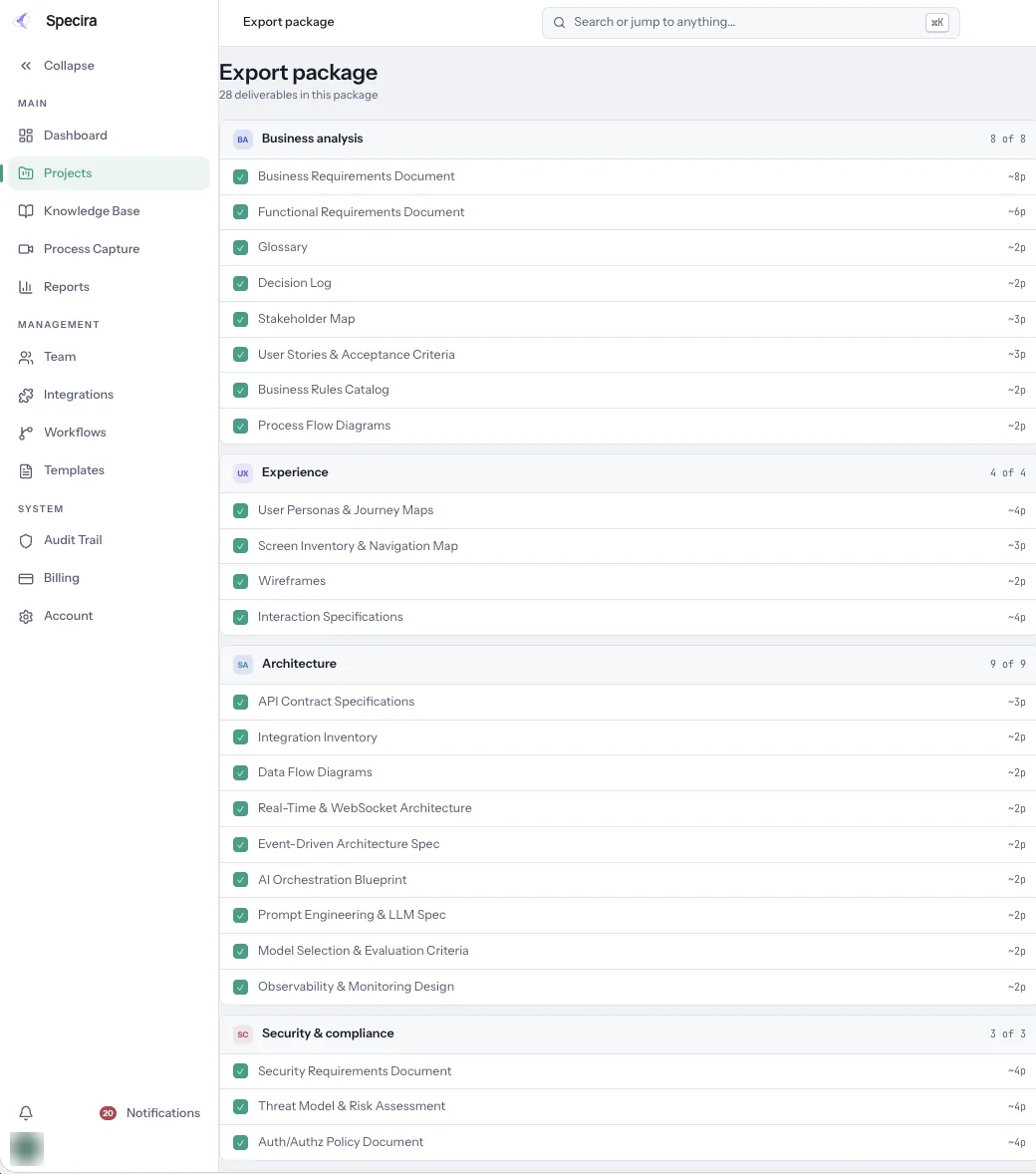
Screens are from a seeded Specira demo workspace; counts and scores are sample data.
Book a demo and see the Security Analyst derive your first security requirements register from the obligations already in your knowledge base.
Book a Demo