Home About Services Use Cases Resources Blog FAQ Book a Demo

Insights on requirements intelligence

Jama and Visure Both Shipped MCP Servers. Neither Shipped Requirements Intelligence.
AI GovernanceSeptember 2026

Jama and Visure Both Shipped MCP Servers. Neither Shipped Requirements Intelligence.

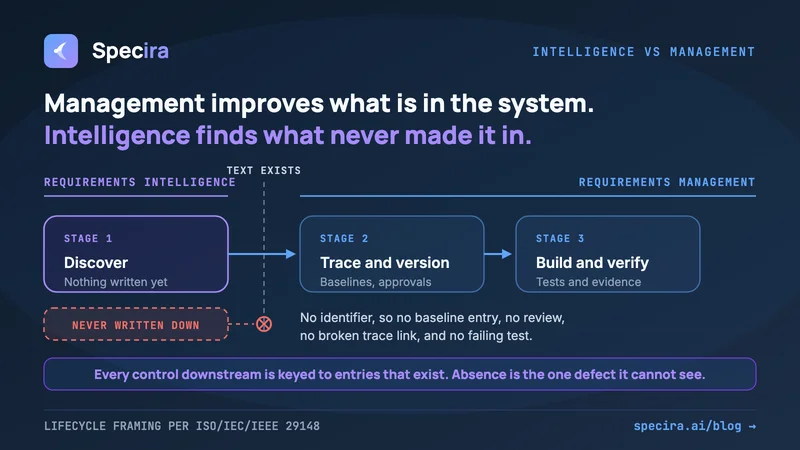
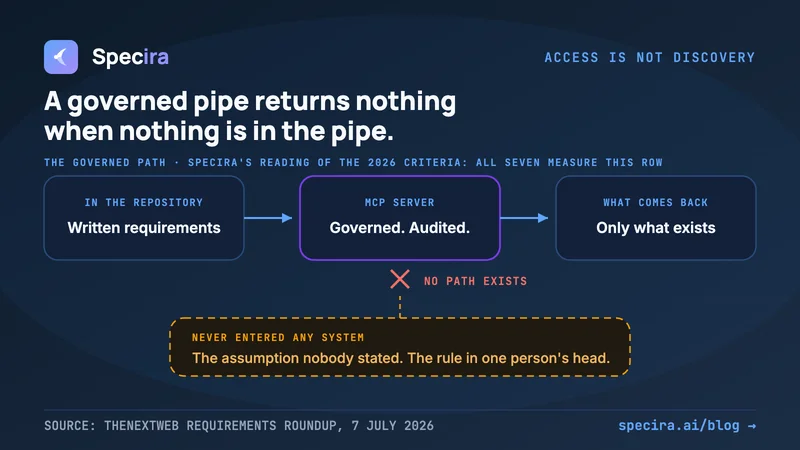
Two requirements vendors shipped Model Context Protocol servers a month apart in 2026, both wrapped in governance and traceability language. An MCP server governs access to requirements that already exist in a system. A July 2026 roundup compared eight tools across seven criteria, and not one of them measures whether a requirement is missing.

Read article: Jama and Visure Both Shipped MCP Servers. Neither Shipped Requirements Intelligence.
IBM Just Shipped Agentic Automation for Requirements at Scale. It Still Can't Answer One Question.
Digital TransformationSeptember 2026

IBM Just Shipped Agentic Automation for Requirements at Scale. It Still Can't Answer One Question.

IBM Engineering AI Hub 1.3 industrializes everything that happens to a requirement after somebody asserts it, and it is genuinely valuable infrastructure. It asserts nothing about whether the assertion was ever checked. Practitioners already draw that line: 40% would let AI recommend a code-management action, 23% would let it act.

Read article: IBM Just Shipped Agentic Automation for Requirements at Scale. It Still Can't Answer One Question.
Software Still Fails the Same Way It Did in 1995. A 2026 Index Just Named the Patterns.
Software EconomicsJune 2026

Software Still Fails the Same Way It Did in 1995. A 2026 Index Just Named the Patterns.

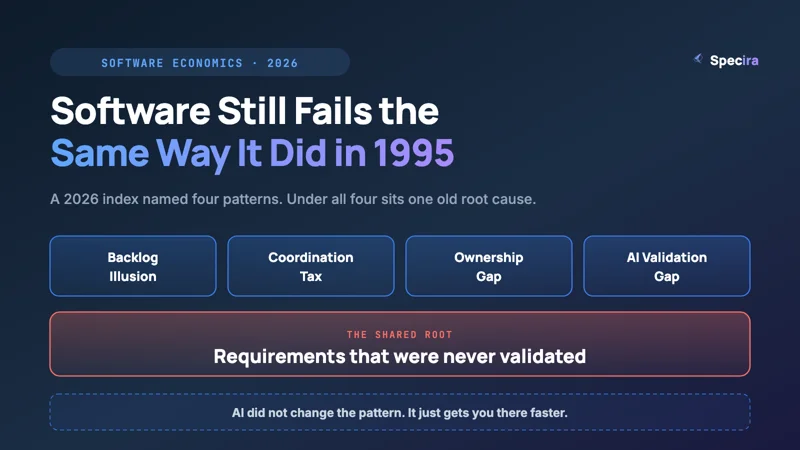
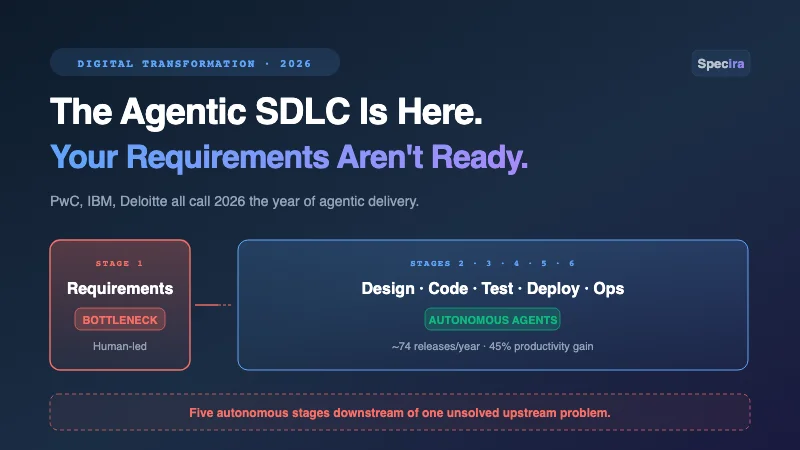
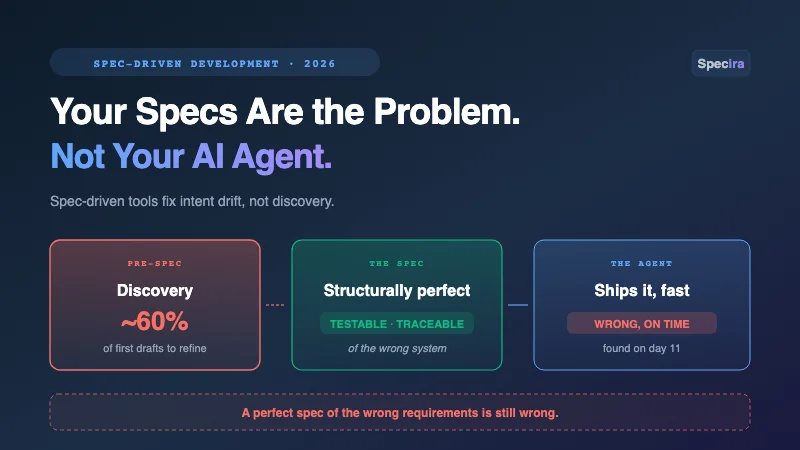
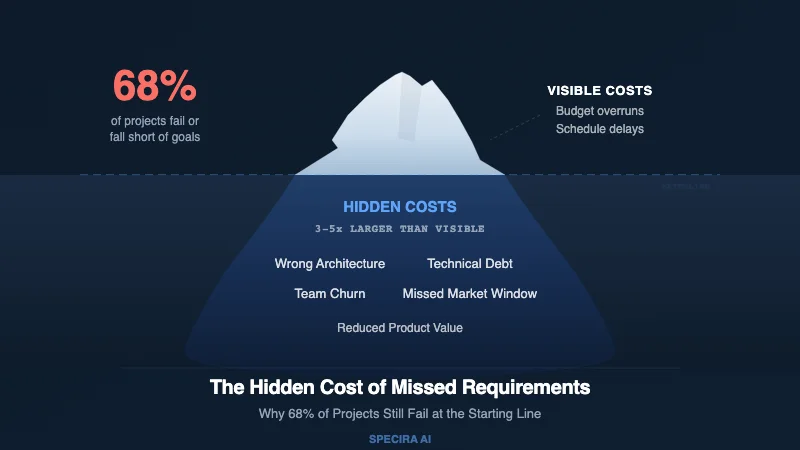
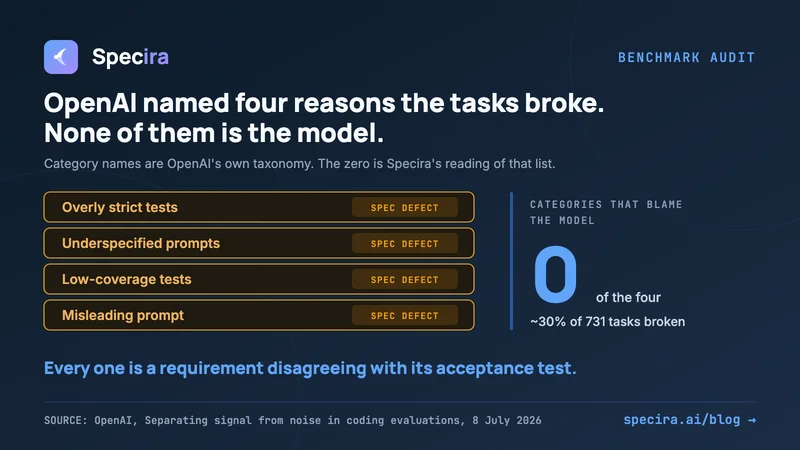
Every year a new methodology promises to fix delivery. The failure rate barely moves. A 2026 index named four structural patterns, and under all four sits the same root the industry has documented since the 1990s: requirements, not code. AI did not change the pattern. It made teams reach it faster.

Read article: Software Still Fails the Same Way It Did in 1995. A 2026 Index Just Named the Patterns.
EU AI Act compliance: high-risk obligations moved to December 2, 2027
AI GovernanceMay 2026

EU AI Act Compliance Requirements: What Moved to 2027 and What Landed in 2026

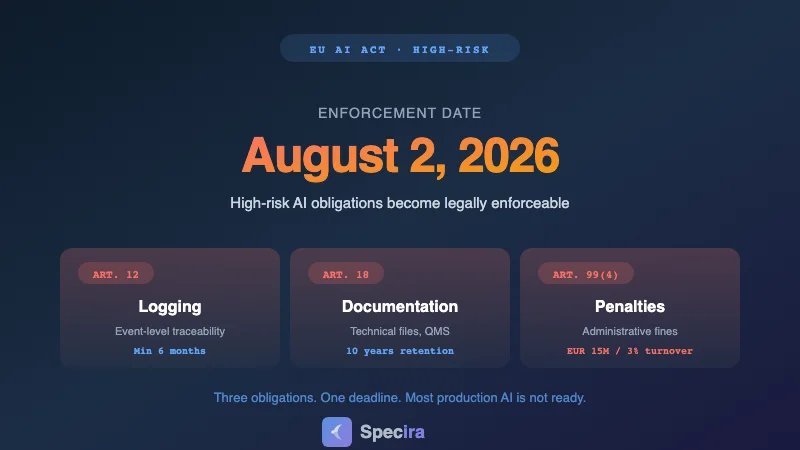
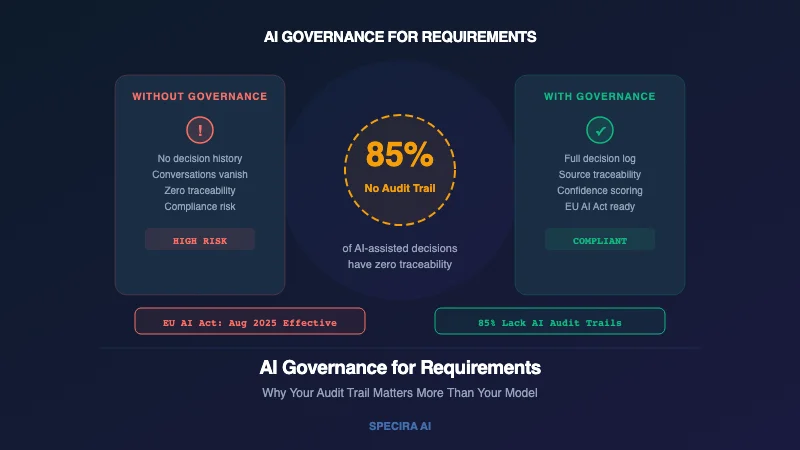
The Digital Omnibus moved the EU AI Act high-risk obligations to December 2, 2027, while Article 50 transparency took effect August 2, 2026. Article 12 logging, Article 18 ten-year documentation, and Article 99(4) fines up to EUR 15M or 3% of worldwide turnover still land. Here is what production teams should do with the runway.

Read article: EU AI Act Compliance Requirements After the Digital Omnibus

What we write about, and why it matters

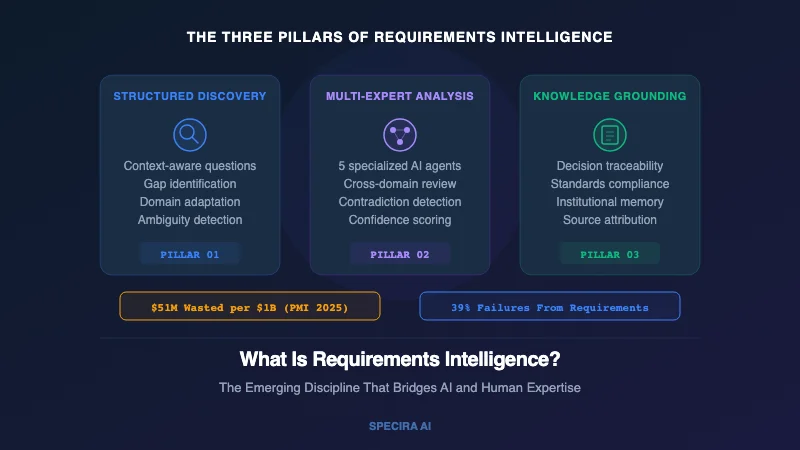
This blog exists because after 25 years of building software at companies from 10 people to 20,000 employees, one pattern kept showing up. Projects didn't fail because developers wrote bad code. They failed because the requirements were unclear, incomplete, or buried in a document nobody opened after the kickoff meeting. Specira AI was built to fix that root cause, and this blog is where we think out loud about the problem and the solution.

You'll find perspectives on requirements intelligence, AI-assisted specification writing, the economics of software rework, and the organizational patterns that cause teams to build the wrong thing. Some of it's technical. Some of it's strategic. All of it comes from real experience delivering enterprise software across industries like fintech, manufacturing, retail, and SaaS.

We publish new articles roughly twice a month, always grounded in real data with source links, real company examples, and the kind of opinions you only form after watching the same failure mode play out forty or fifty times. If you've ever sat through a sprint review and thought "that's not what I asked for," this blog is for you.
Want to see requirements intelligence in action?

Join the early access waitlist and be among the first to experience Specira AI.
Book a Demo