A user persona and journey map template describes who uses the product, what each role is trying to get done, and where the current experience breaks. It exists to let a team make one decision with confidence: which pains to fix first, for whom, and what a measurably better journey looks like. Specira renders it from the discovery session itself. Every persona card, task row and pain point traces back to an interview, an observation or a typed requirement, never to a workshop guess.
Hand-written personas drift into fiction fast. Someone names a persona after a colleague, gives her a stock photo and three goals nobody interviewed her about, and the journey map becomes the current state with nicer emotions pasted on. Nothing traces to evidence, so nothing can be challenged. When the design review asks why the dispatcher persona hates the scheduler, the honest answer is that a slide said so.
What sections does the user persona and journey map template contain?
The governed default template fixes eight sections. Prose sections are synthesized from discovery; the task list and the pain point inventory are tables built from typed items.
| Section | Depth | How it is produced |
|---|---|---|
| User Role Descriptions | core | Prose synthesized from discovery |
| Key Task List | core | Table from typed items · Persona, Task, Frequency, Criticality |
| Primary Journey (Happy Path) | core | Prose synthesized from discovery |
| Full Persona Cards | standard | Prose synthesized from discovery |
| Journey Maps with Touchpoints | standard | Prose synthesized from discovery |
| Pain Point Inventory | standard | Table from typed items · Persona, Pain Point, Severity, Opportunity |
| Jobs-to-be-Done Framework | full | Prose synthesized from discovery |
| Context Scenarios | full | Prose synthesized from discovery |
How does Specira build the personas and journey maps?
The UX Researcher agent owns this artefact. It compiles the document from the session's typed items: stakeholders become user roles, requirements and constraints feed the task list, and every risk or contradiction the other four agents flagged inline lands in the pain point inventory. The sample shows the mechanism. In the Core Journey Pairs section, dispatcher Dana's current-state map labels each emotion as observed or inferred and states the basis for the call. The paired future-state map keeps the same stage spine and adds a delta row per stage, each delta tracing to a named pain and each target to a committed number with an owner. The assumptions block lists who owns each assumption and when it gets validated.
The Red Team Critic reviews every turn and runs the export readiness gate, which measures resolved decisions rather than page count. A persona whose goals rest on decisions still open renders as a named gap, not an invented quote. Each row carries provenance: who decided, when, and on what evidence. Export the result as DOCX for stakeholders, Markdown or JSON for agents, or push it to Jira, Confluence, GitHub or Linear. The template itself can be cloned and adjusted in the Templates module, with every publication versioned and immutable.
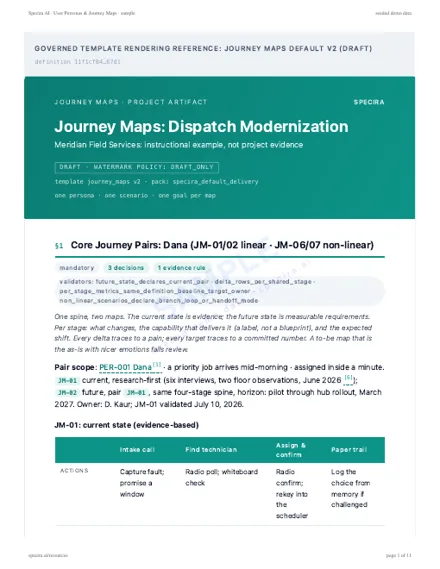
Rendered sample
Rendered from the Specira governed default template on a fictional company, watermarked, with its diagrams. Read it in the browser or take the PDF.
How do teams use the persona and journey map document?
- ✓Prioritize the backlog by painProduct owners rank features against the pain point inventory instead of against whoever spoke loudest in the last meeting.
- ✓Brief designers with evidenceDesigners start wireframes from persona cards and touchpoints that cite interviews, so the first draft answers a real scenario.
- ✓Set targets before the buildDelivery leads take the future-state targets and owners straight into the requirements, with the baseline already stated.
- ✓Onboard new team membersA new analyst reads the context scenarios and understands who the product serves without a week of hallway conversations.
What does the persona and journey map artefact look like in Specira?
The screens below show the discovery session that feeds the personas, the rendered journey map pair, and the export gate report for this artefact.
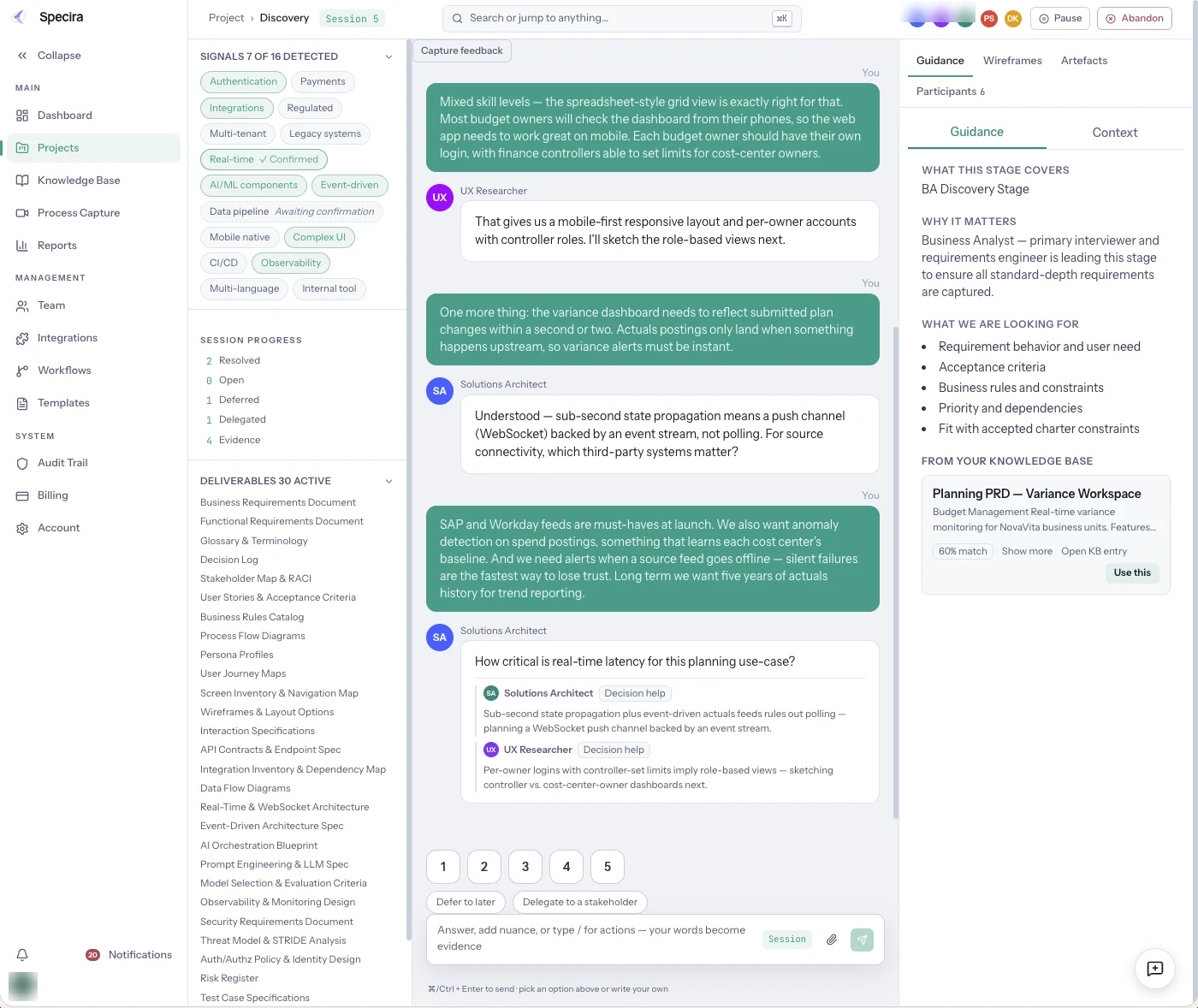
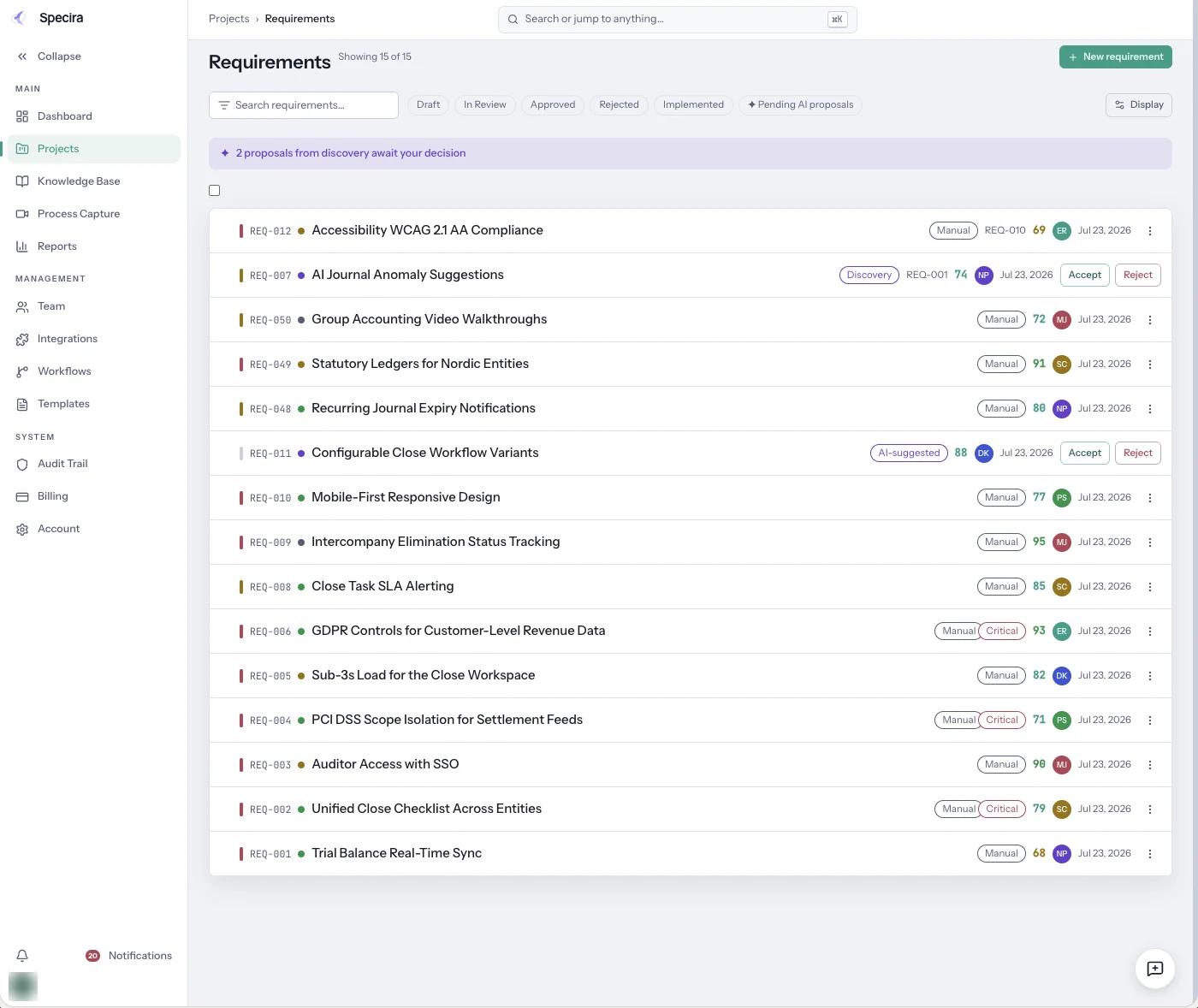
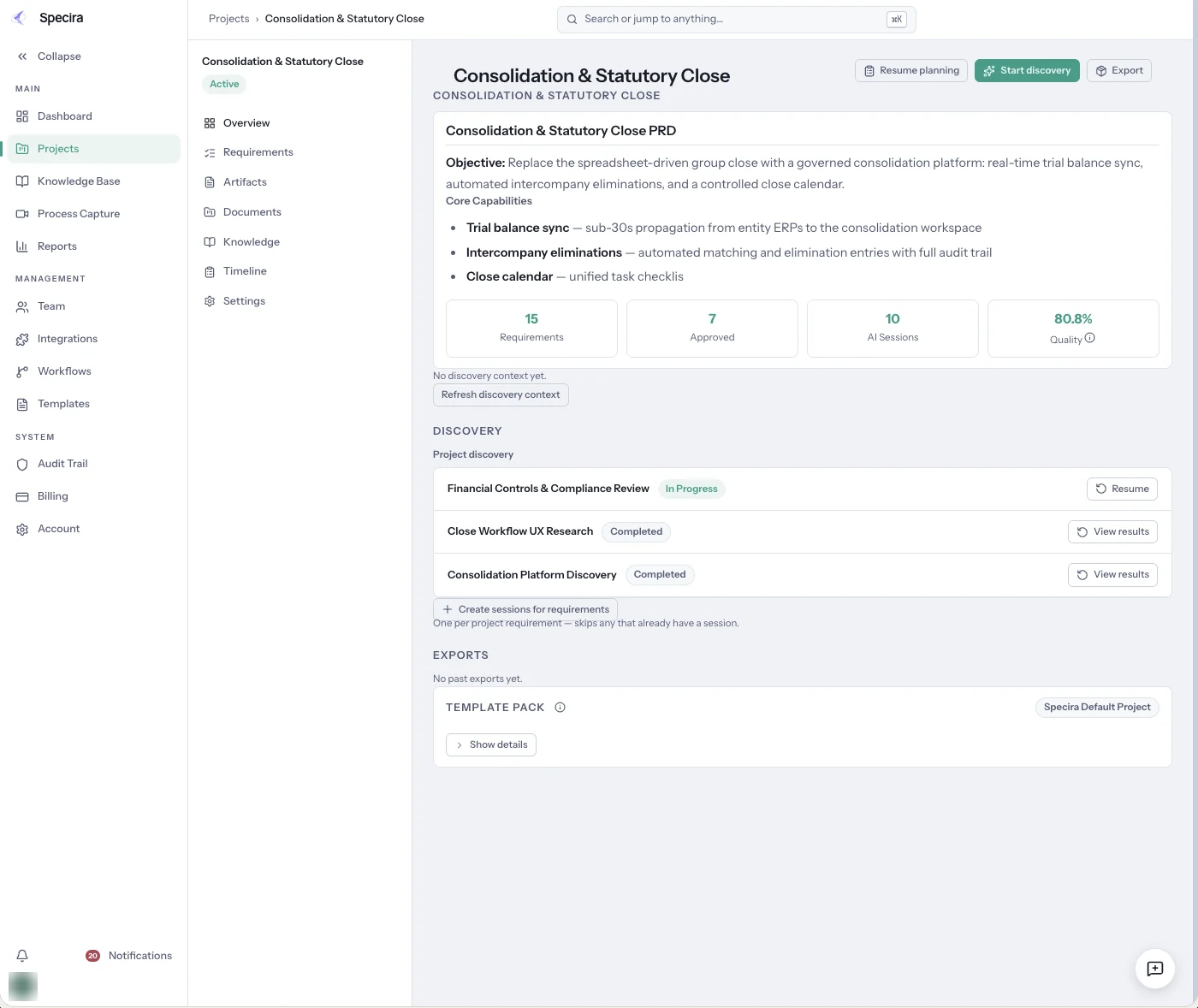
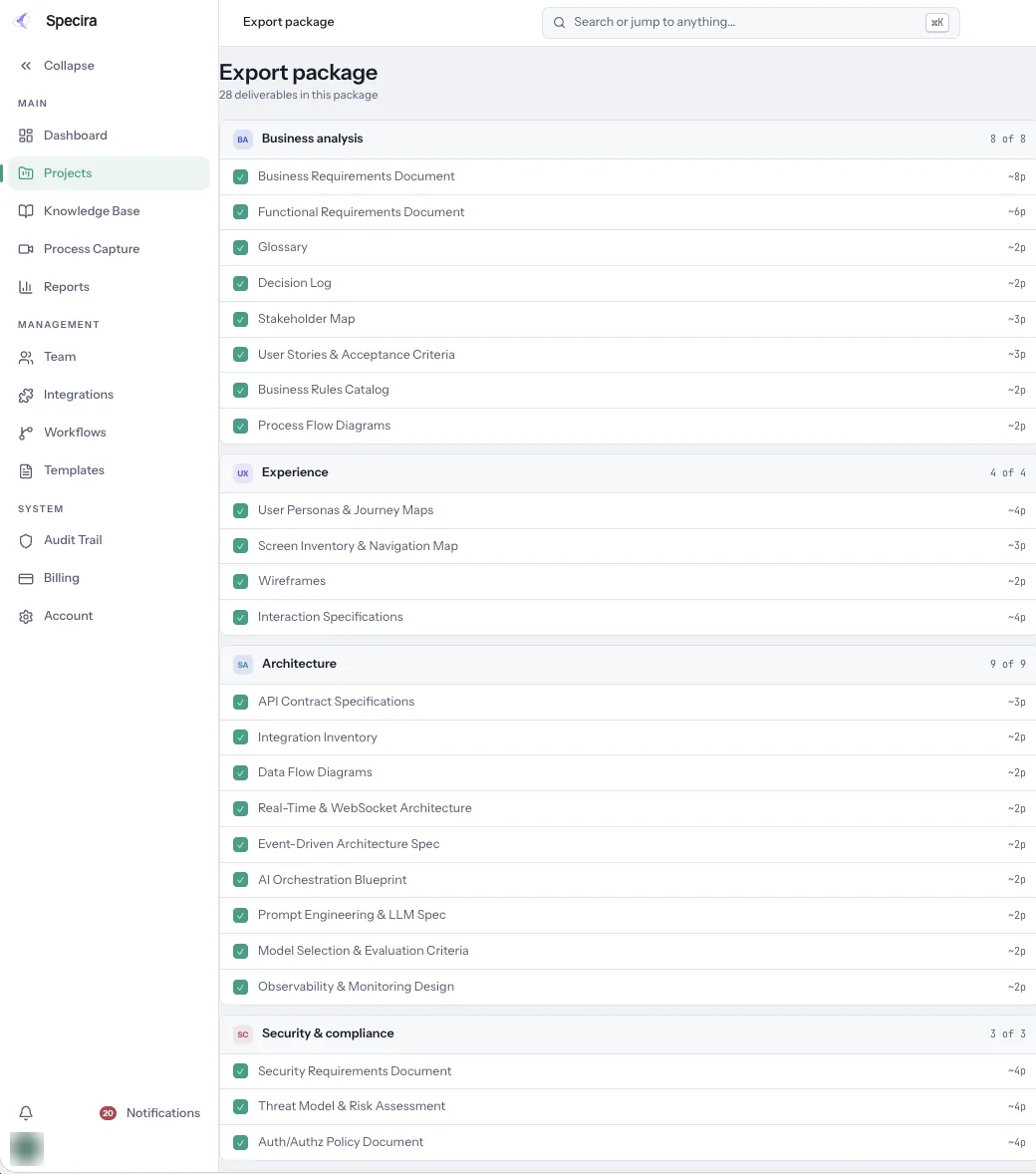
Screens are from a seeded Specira demo workspace; counts and scores are sample data.
Book a demo and watch a discovery session turn into personas and journey maps your team can defend.
Book a Demo