A stakeholder map template records who can affect a project, on what basis, how they feel about it today and where you need them to be by cutover. The decision it supports is the engagement plan: which gaps between current and desired disposition get an action, an owner and a date, and who breaks a tie when stakeholders disagree. Specira compiles the map from the stakeholders, constraints and decisions typed during discovery.
Hand-drawn stakeholder grids place people at high or low with no stated basis, never carry a date, and are drawn once at kickoff. The RACI matrix (Responsible, Accountable, Consulted, Informed) ends up with two accountable names on a row, or none. Communication plans list every person instead of tiers, run to three pages, and nobody follows them. The union representative's stance changed in June and the map still says May.
What sections does the stakeholder map contain?
The governed default template runs from the register and grid through the RACI matrix, communication plan, escalation paths and change management, with the power and interest grid generated as a diagram.
| Section | Depth | How it is produced |
|---|---|---|
| Name/Role List | core | Table from typed items · Name, Role, Organization |
| Influence/Interest Grid | standard | Table from typed items · Stakeholder, Influence, Interest, Strategy |
| Power / Interest Grid | standard | Generated diagram |
| RACI Matrix | standard | Table from typed items · Deliverable, Responsible, Accountable, Consulted, Informed |
| Communication Plan | full | Table from typed items · Stakeholder, Channel, Frequency, Content |
| Escalation Paths | full | Prose synthesized from discovery |
| Change Management Approach | full | Prose synthesized from discovery |
How does Specira build the stakeholder map?
The Business Analyst agent owns the stakeholder map, with the Security Analyst and Solutions Architect adding inline notes when a stakeholder holds a veto tied to a constraint, and the Red Team Critic flagging placements without a stated basis. It compiles from the session's typed stakeholders, constraints and decisions. The Meridian sample's Stakeholder Register section carries, for every row, a power basis in plain words, a dated disposition and a current-to-desired engagement gap, plus a sentiment log showing how the union representative's stance moved between kickoff and the telemetry briefing. The Decision Rights section names the model chosen (RACI over DACI, with the reason) and its validator allows exactly one accountable per row.
The Influence and Interest Grid renders from source with its date, and every placement must be justified by the power basis in the register; the Communication Plan derives one row per grid tier, not per person, and must fit on a page. A register without a dated disposition fails its validator and renders as a named gap. Knowledge base entries such as collective-agreement clauses are matched with a confidence score and cited. The Red Team Critic gates the export on decisions resolved, and the map ships as DOCX, Markdown or JSON, or pushes to Confluence.
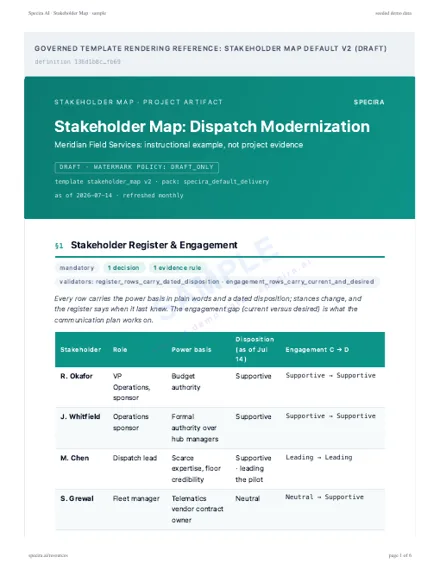
Rendered sample
Rendered from the Specira governed default template on a fictional company, watermarked, with its diagrams. Read it in the browser or take the PDF.
How do teams use the stakeholder map?
- ✓Work the gap, not the listEach current-to-desired gap gets an action, an owner and a date, so engagement effort goes where a stance needs to move.
- ✓Settle who decidesThe RACI matrix names exactly one accountable per deliverable, and the escalation table names humans in order with response times.
- ✓Refresh on a cadenceThe register carries an as-of date and a refresh owner, so the map stays a living record rather than a kickoff slide.
- ✓Watch salience changeA salience note records whose power or urgency rises at a known milestone and when to re-place them on the grid.
What does the stakeholder map look like inside Specira?
The screens below follow a stakeholder map inside Specira, from the participants list and delegation in discovery to the approval configuration that names each approver.
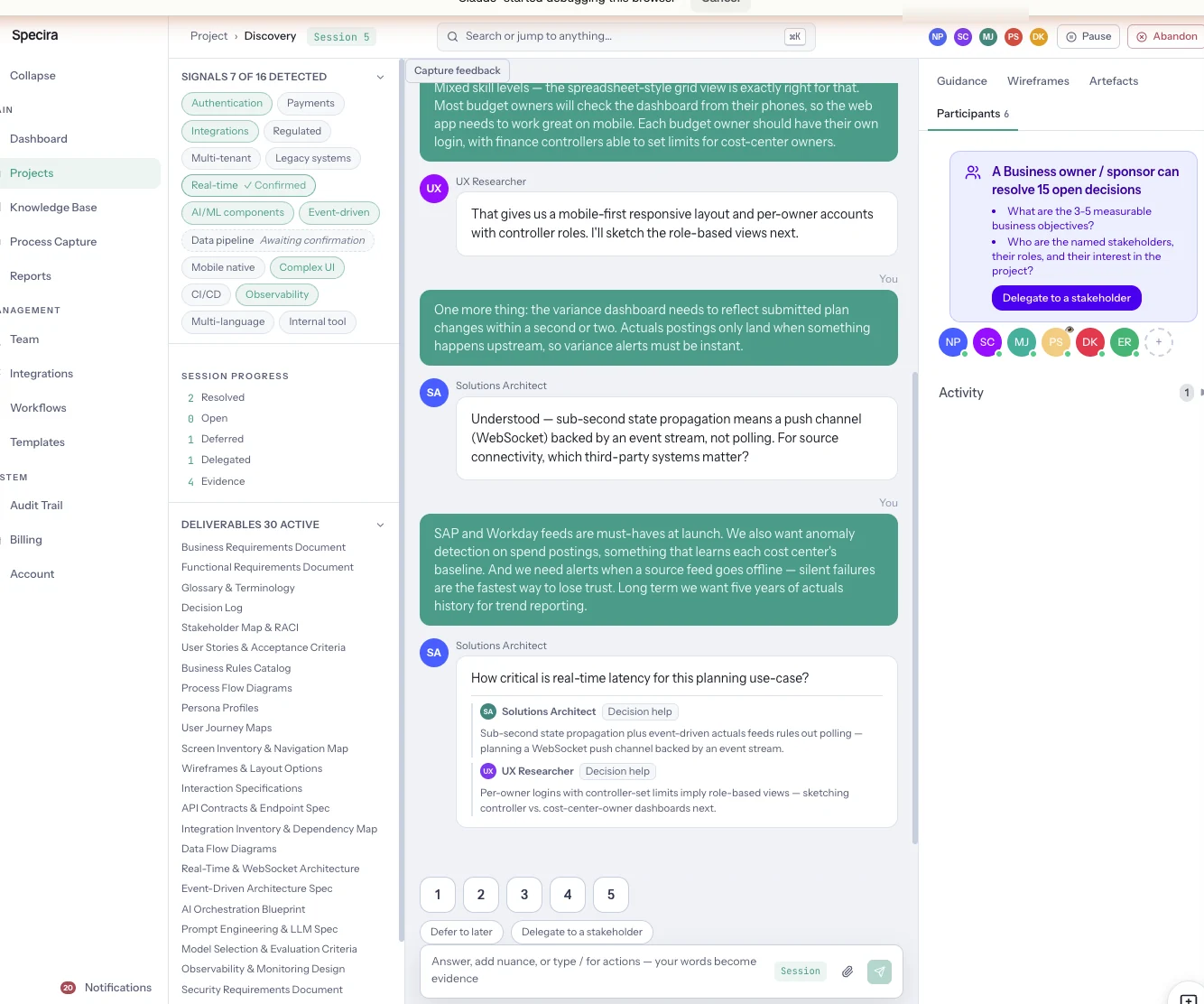
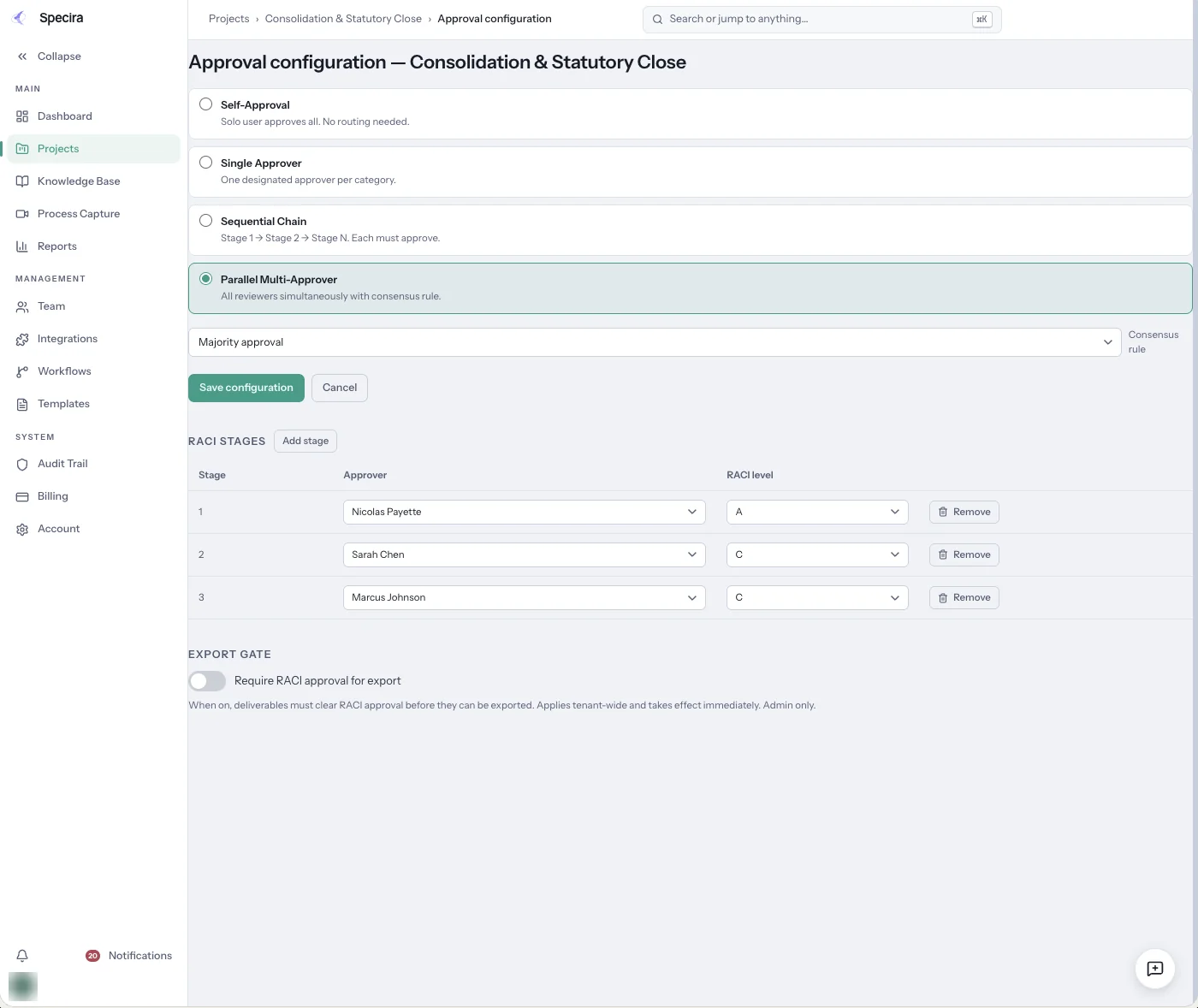
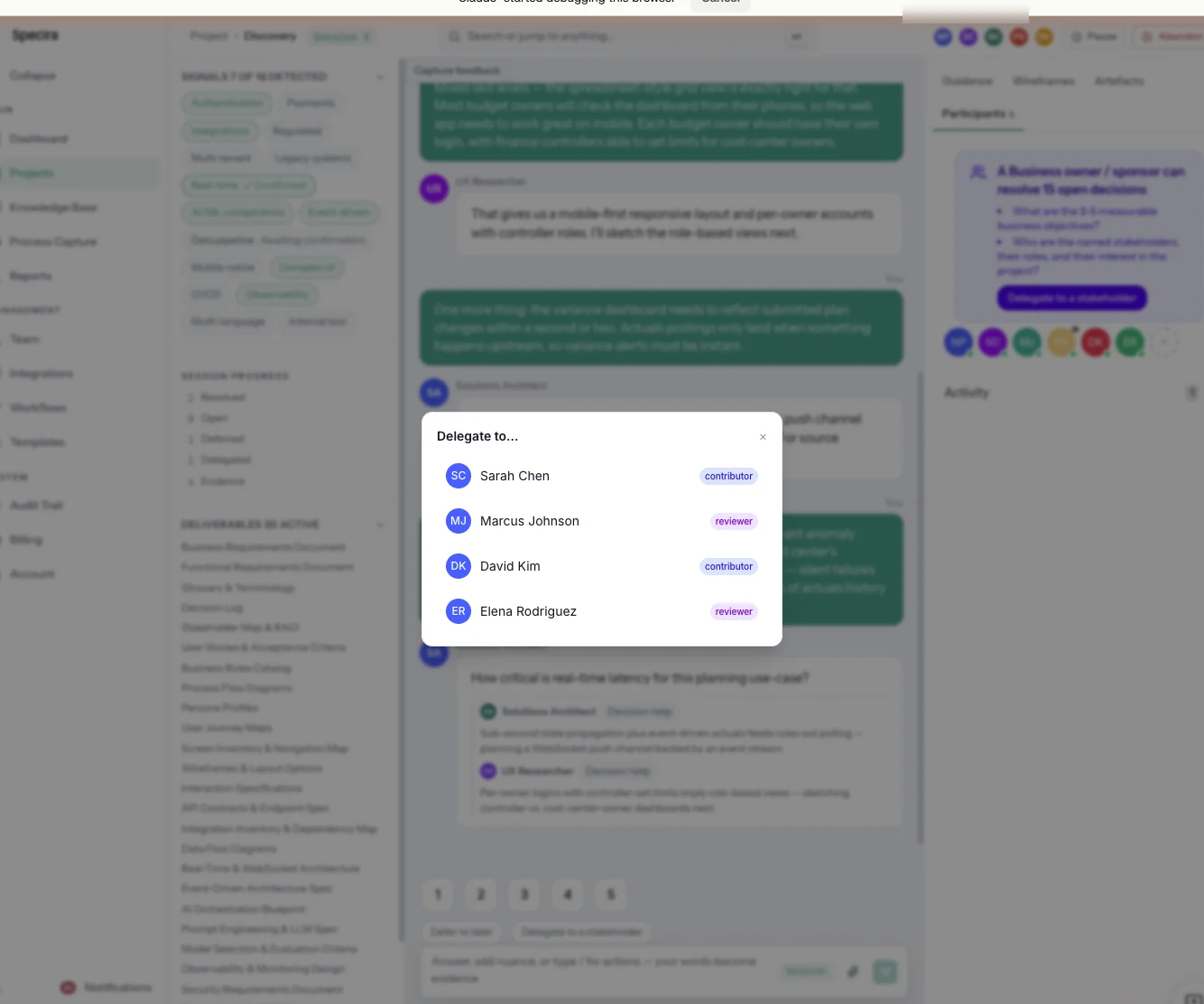
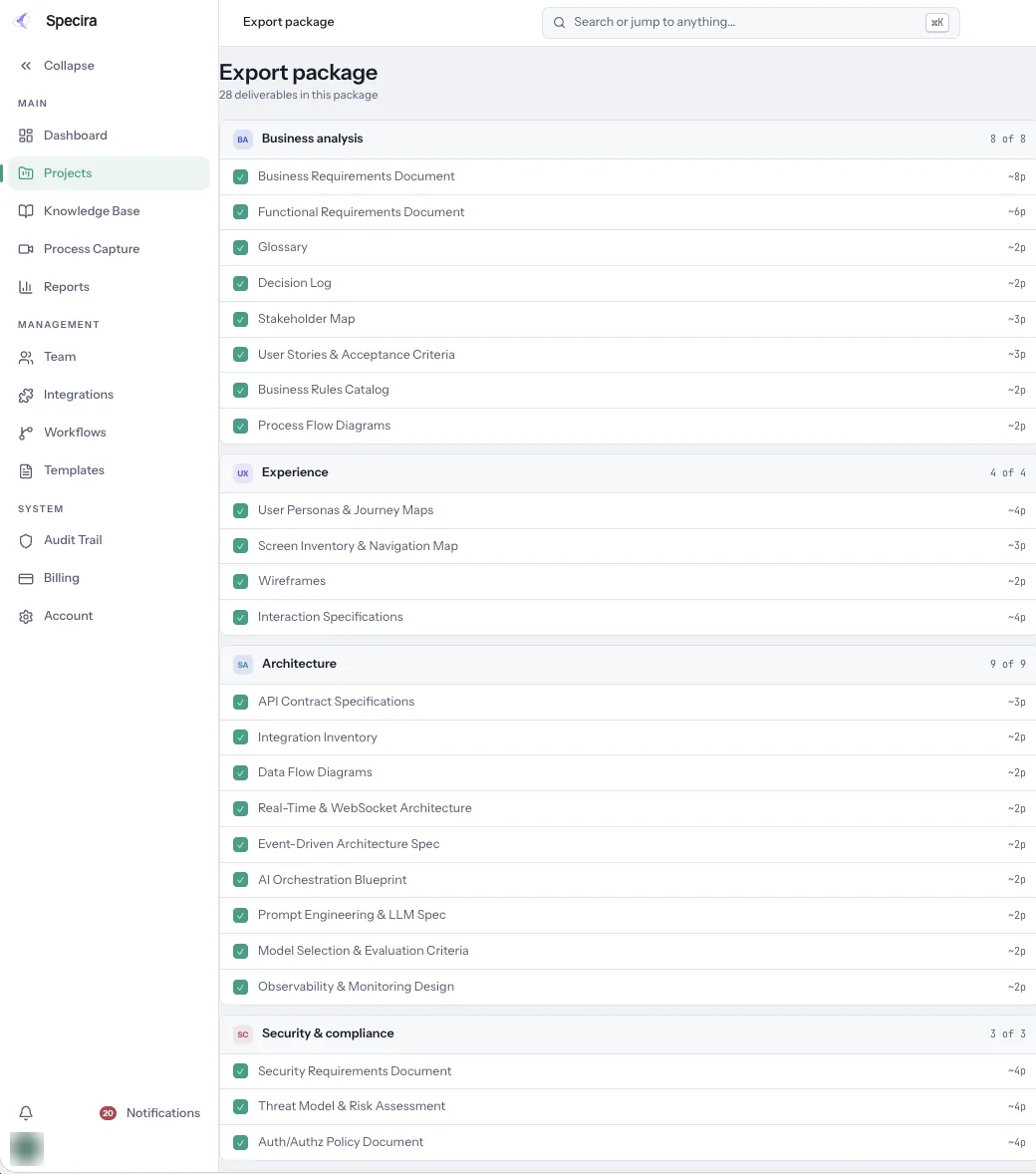
Screens are from a seeded Specira demo workspace; counts and scores are sample data.
Book a demo and watch a stakeholder map compile its register, grid and RACI matrix from your discovery session.
Book a Demo