A user stories template turns a specified behavior into cards a delivery team can build in slices: an actor who is a named persona, a capability, the value, and the acceptance tests that prove the card is done. The decision it supports is the slice plan, starting with the walking skeleton, the thinnest end-to-end path that proves the whole loop works. Specira compiles the story set from the functional requirements it covers and the decisions that ordered them.
Hand-written stories name a generic user, cover three requirements at once, and carry acceptance criteria such as works correctly that two testers would read two ways. Boundary values never get a row, negative paths get forgotten, and the link back to the requirement lives in someone's head. The sprint delivers the card and nobody can say which behavior it actually proved.
What sections does the user stories artefact contain?
The governed default template groups stories by epic and feature, writes acceptance criteria in Given/When/Then form, sizes and orders them, draws the story map and enumerates edge-case, negative and cross-cutting stories.
| Section | Depth | How it is produced |
|---|---|---|
| Epic Summary | core | Prose synthesized from discovery |
| Stories Grouped by Feature | core | Table from typed items · ID, Epic, Story, Priority, AC Summary |
| Given/When/Then AC | standard | Prose synthesized from discovery |
| Story Points & Priority | standard | Table from typed items · ID, Story, Story Points, Priority, Dependencies |
| Story Map Visualization | full | Generated diagram |
| Edge Case Stories | full | Prose synthesized from discovery |
| Negative Test Stories | full | Prose synthesized from discovery |
| Cross-Cutting Stories | full | Prose synthesized from discovery |
How does Specira build the user stories?
The Business Analyst agent owns the story set, with the UX Researcher adding persona notes and the Red Team Critic flagging cards whose acceptance rows are vague. It is compiled from the functional requirements a story covers, the personas in the product requirements document and the slice decisions recorded in discovery. The Meridian sample's Epic Summary and Slice Plan section records the walking-skeleton decision, who agreed it and when, and maps each slice to a delivery milestone. Its Story Register section renders one card per story: a named actor, a scope fence that says what the card excludes, explicit preconditions, and acceptance rows with real values, an observable result, a path class and a test-case identifier.
Three validators guard the register: acceptance rows must carry concrete values, preconditions must be stated even when there are none, and every bounded input needs a boundary row. A story whose covering requirement is still open renders as a named gap. Each card cites the functional requirements document (FRD) scenario outlines it proves and carries provenance for the decisions behind it. The Red Team Critic gates export on decisions resolved; the story set then ships to Jira, Linear or GitHub, or as DOCX, Markdown and JSON.
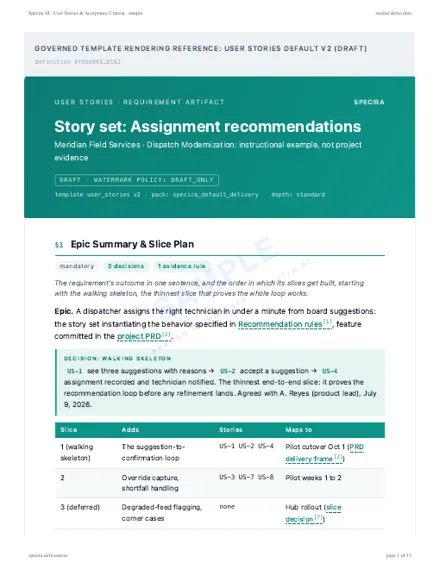
Rendered sample
Rendered from the Specira governed default template on a fictional company, watermarked, with its diagrams. Read it in the browser or take the PDF.
How do teams use the user stories?
- ✓Plan the walking skeletonThe slice decision orders stories so the first increment proves the full loop before any refinement lands.
- ✓Push cards to the trackerStories export to Jira, Linear and GitHub with their acceptance rows and identifiers, not a summary line.
- ✓Test from the row, not the chatConcrete test instances and expected results mean two testers reading the same row run the same test.
- ✓Trace a card to its requirementEvery story names the functional requirements it covers, so a failed test points at a specific statement.
What do user stories look like inside Specira?
The screens below follow the assignment-recommendation story set from the slice decision in discovery to the cards pushed into the tracker.
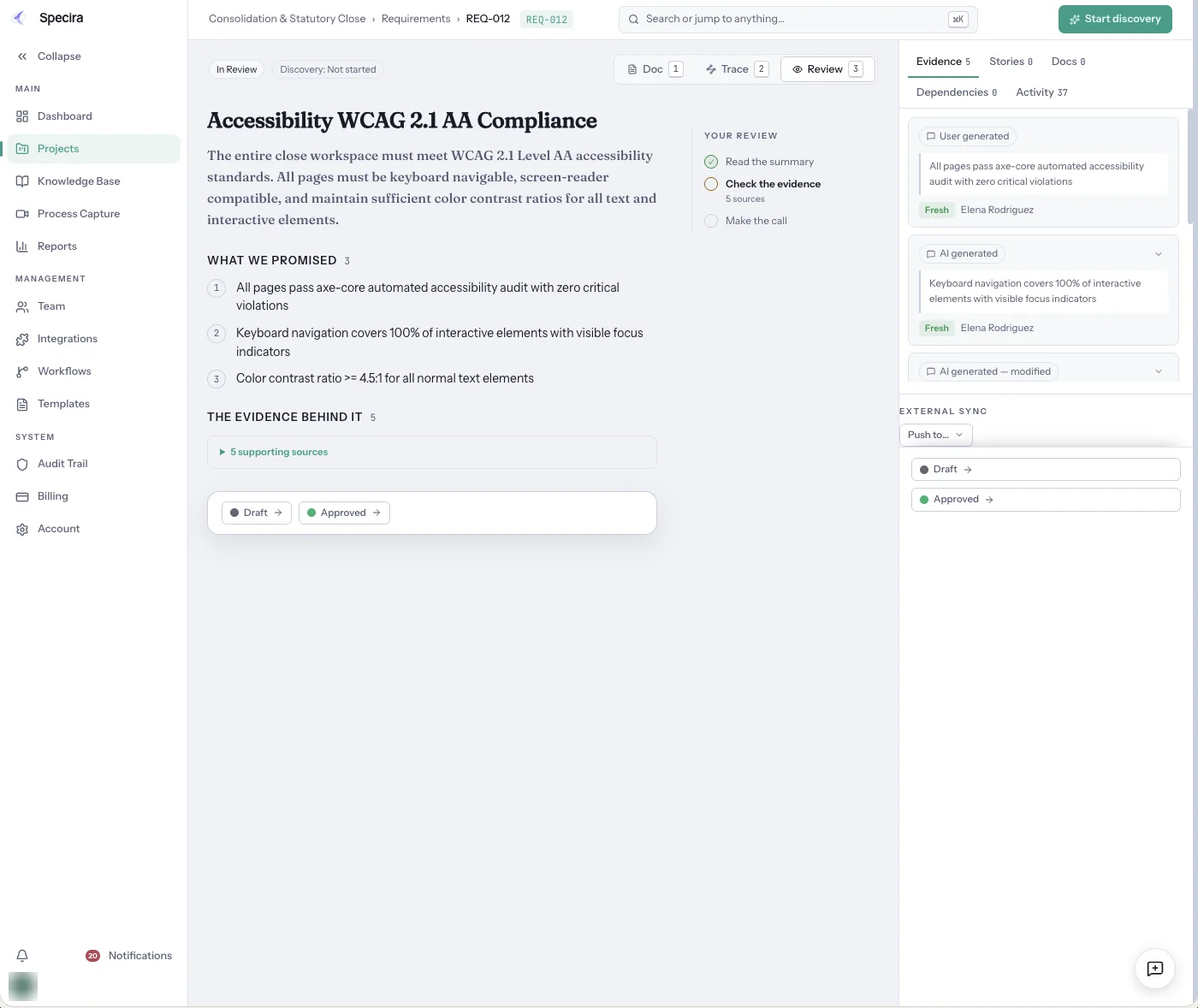
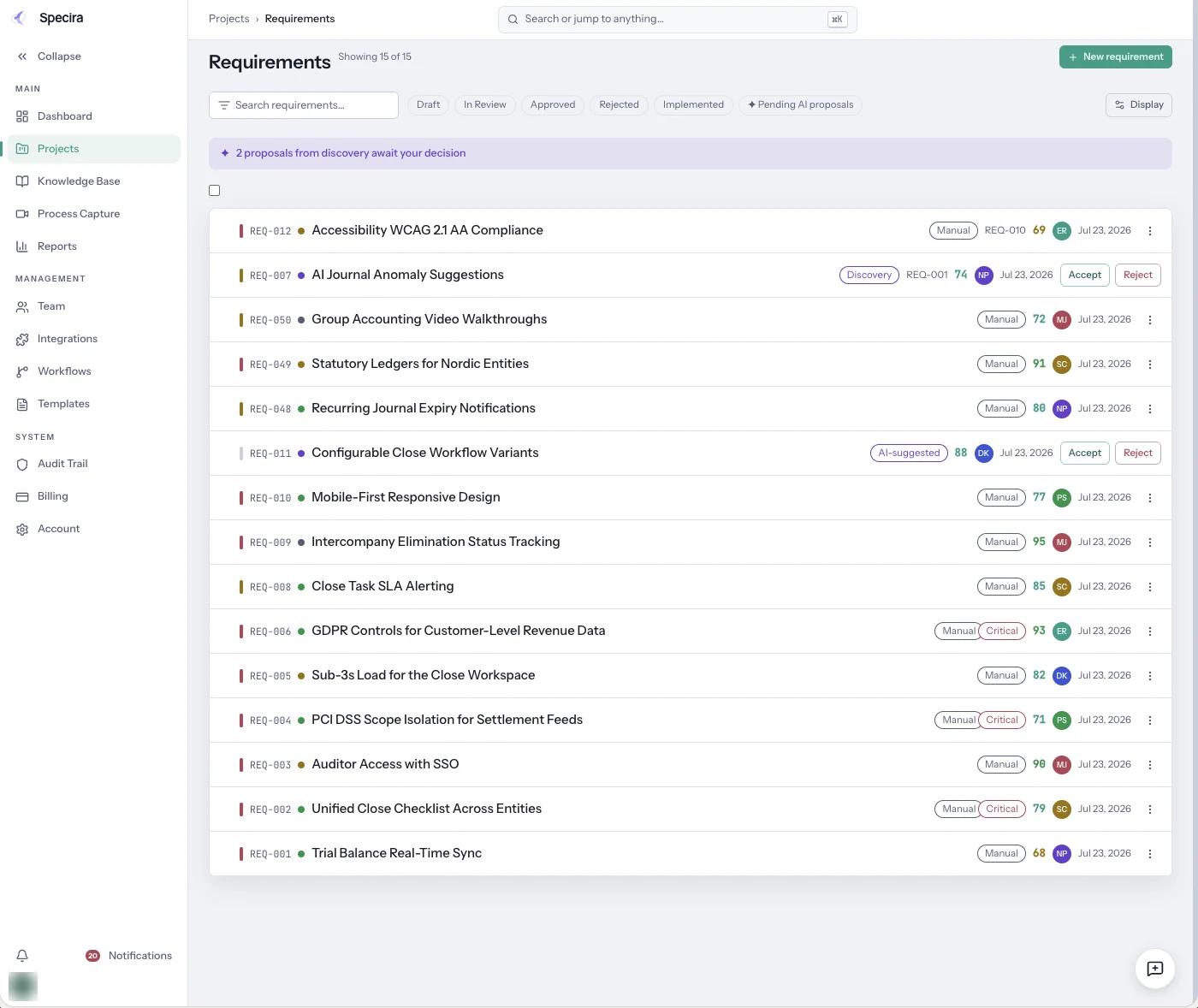
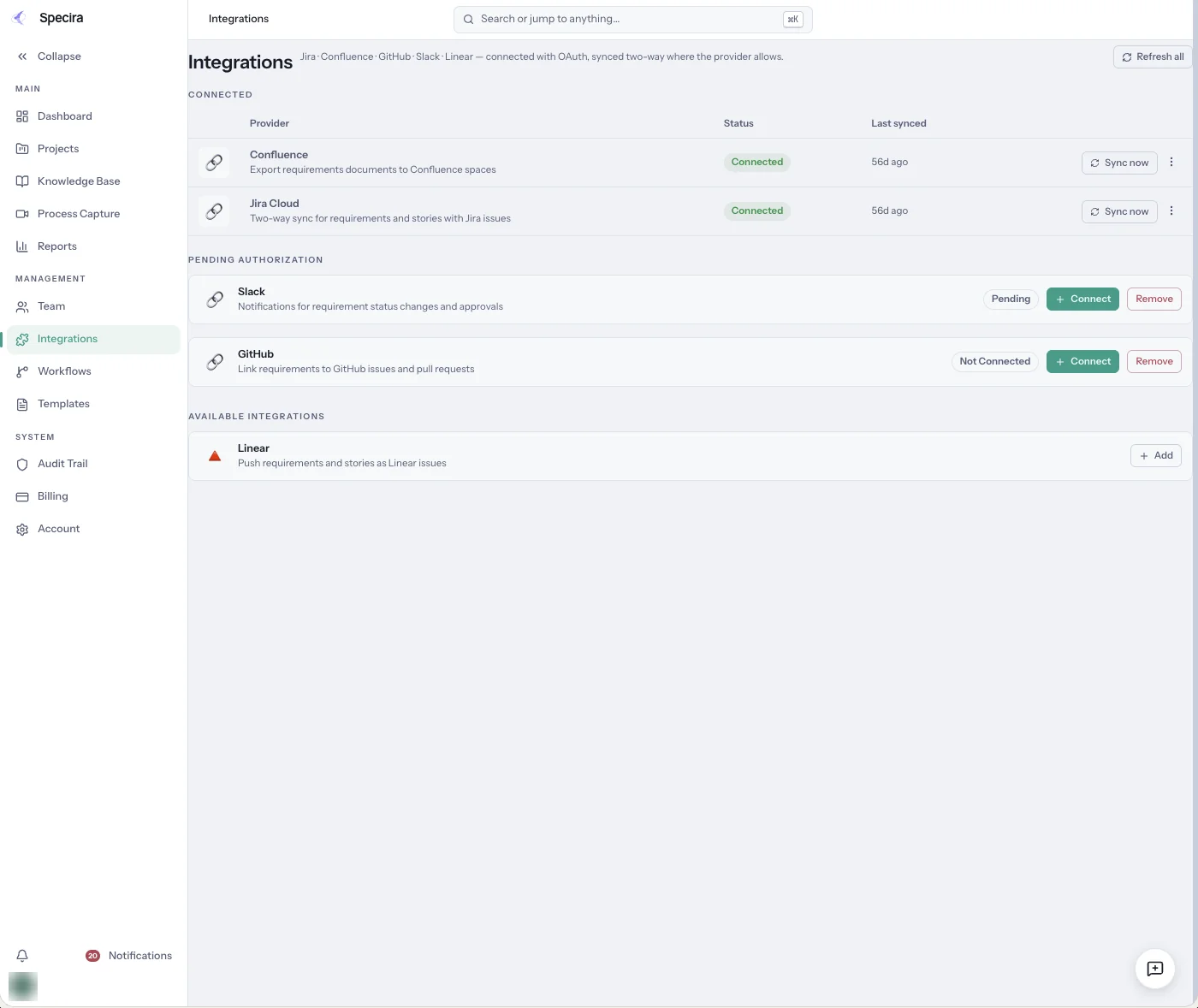
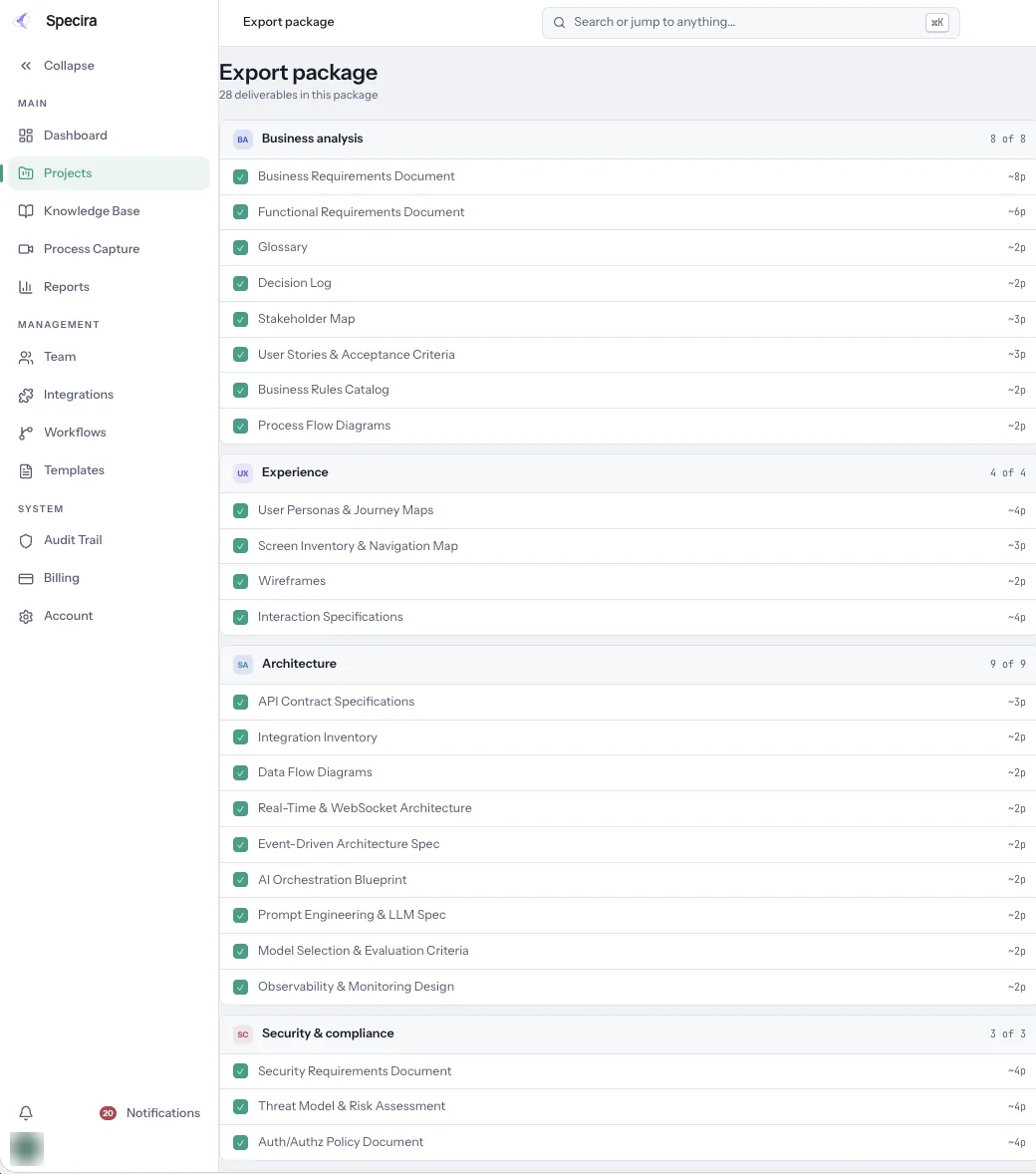
Screens are from a seeded Specira demo workspace; counts and scores are sample data.
Book a demo and watch a user stories set compile from your functional requirements, acceptance rows included.
Book a Demo