A test strategy and acceptance checklist defines which test levels exist, what each covers, who owns it, and the thresholds a release must clear: coverage floors, critical-path test cases, an edge case matrix, acceptance criteria, performance and security test plans, data migration checks and an accessibility checklist. It lets a team decide, before the first sprint, what "done" will be measured against and which gates block a merge or a release.
A hand-written test strategy tends to be a pyramid diagram and a coverage number nobody chose. The ratio gets copied from a blog, the exit criteria stay vague, and flaky tests get disabled quietly. When the release date arrives, acceptance is negotiated in a meeting instead of read from a table, and the migration dry run is the thing that got skipped.
What sections does a test strategy contain?
Specira's governed default template produces nine sections, mixing synthesized prose (test levels, performance and security plans) with typed tables (critical-path cases, edge cases, acceptance criteria, accessibility).
| Section | Depth | How it is produced |
|---|---|---|
| Test Levels Defined | core | Prose synthesized from discovery |
| Key Test Cases per Critical Path | core | Table from typed items · Path, Test Case, Expected Result |
| Test Plan per Level | standard | Prose synthesized from discovery |
| Edge Case Matrix | standard | Table from typed items · Feature, Edge Case, Test Approach |
| Acceptance Criteria | standard | Table from typed items · Criterion, Threshold, Method |
| Performance Test Plan | full | Prose synthesized from discovery |
| Security Test Plan | full | Prose synthesized from discovery |
| Data Migration Test Plan | full | Prose synthesized from discovery |
| Accessibility Test Checklist | full | Table from typed items · Criterion, Level, Test Method, Pass |
How does Specira build the test strategy?
The Red Team Critic owns this artefact, which fits its role: it validates and challenges requirements, and the test strategy is where those challenges become checks. It compiles the document from the typed decisions of the discovery session, with the Solutions Architect's architecture decisions as evidence. In the sample, section 1 (Test Shape and Approach) records a pyramid for the modular-monolith API and a trophy for the typed component front end, each with its architectural reason, plus a size contract that continuous integration (CI) enforces. Section 2 (Risk-Based Prioritization) links every suite to a risk register entry and names the areas deliberately tested lightly. Section 5 (CI Gates and Verification Commands) lists each check with whether it blocks, its owner, its fix timeline, and a command palette defined once so user stories cite the same commands.
The validators refuse a coverage number without its tool and caveat, and a flaky-test policy without an owner and a clock, so a gap the Red Team Critic flagged as an assumption risk cannot slip into the exit criteria. Undecided sections render as named gaps: no acceptance threshold gets invented to complete a table. Every row keeps its provenance, including the approver who accepted a lightly tested area and the date. The export gate measures decisions resolved, ships the deferred ones in a gap report, and outputs DOCX, Markdown, JSON or a push to Jira, GitHub, Confluence or Linear so the checklist lives next to the stories it gates.
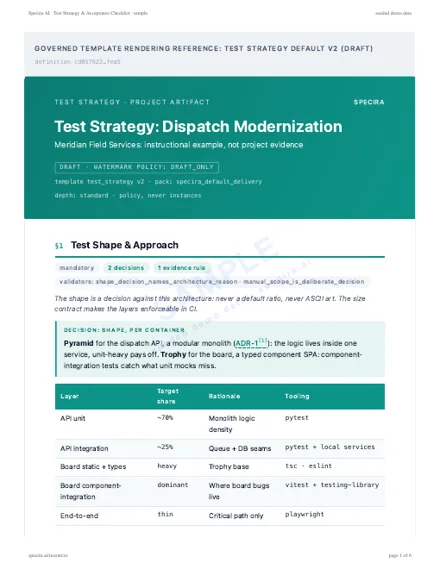
Rendered sample
Rendered from the Specira governed default template on a fictional company, watermarked, with its diagrams. Read it in the browser or take the PDF.
How do teams use the test strategy and acceptance checklist?
- ✓Set merge and release gatesThe CI gates table says which checks block, who owns them and how fast a failure must be fixed, so nobody argues about it on release day.
- ✓Aim testing at real riskSuites are tied to named risks, and lightly tested areas are accepted in writing by a named approver.
- ✓Read acceptance from a tableCriterion, threshold and method sit in one place, which turns the acceptance meeting into a checklist walk.
- ✓Gate AI-generated codeAgent-flagged stories cite the same command palette, and the human checkpoint classes are named rather than assumed.
What does the test strategy look like inside Specira?
These screens show the Red Team Critic challenging a coverage target, the typed gate decisions, and the compiled checklist ready for export.
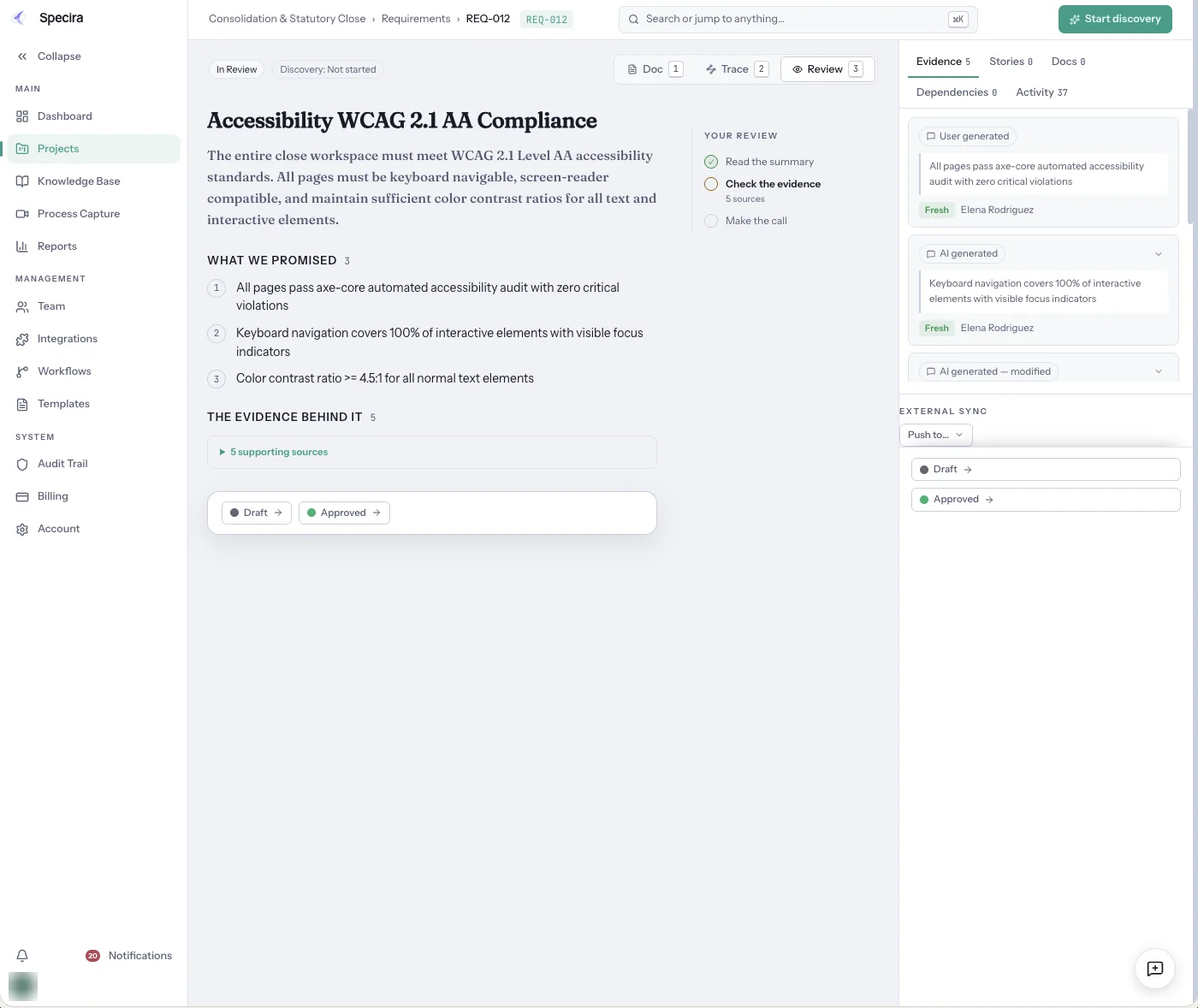
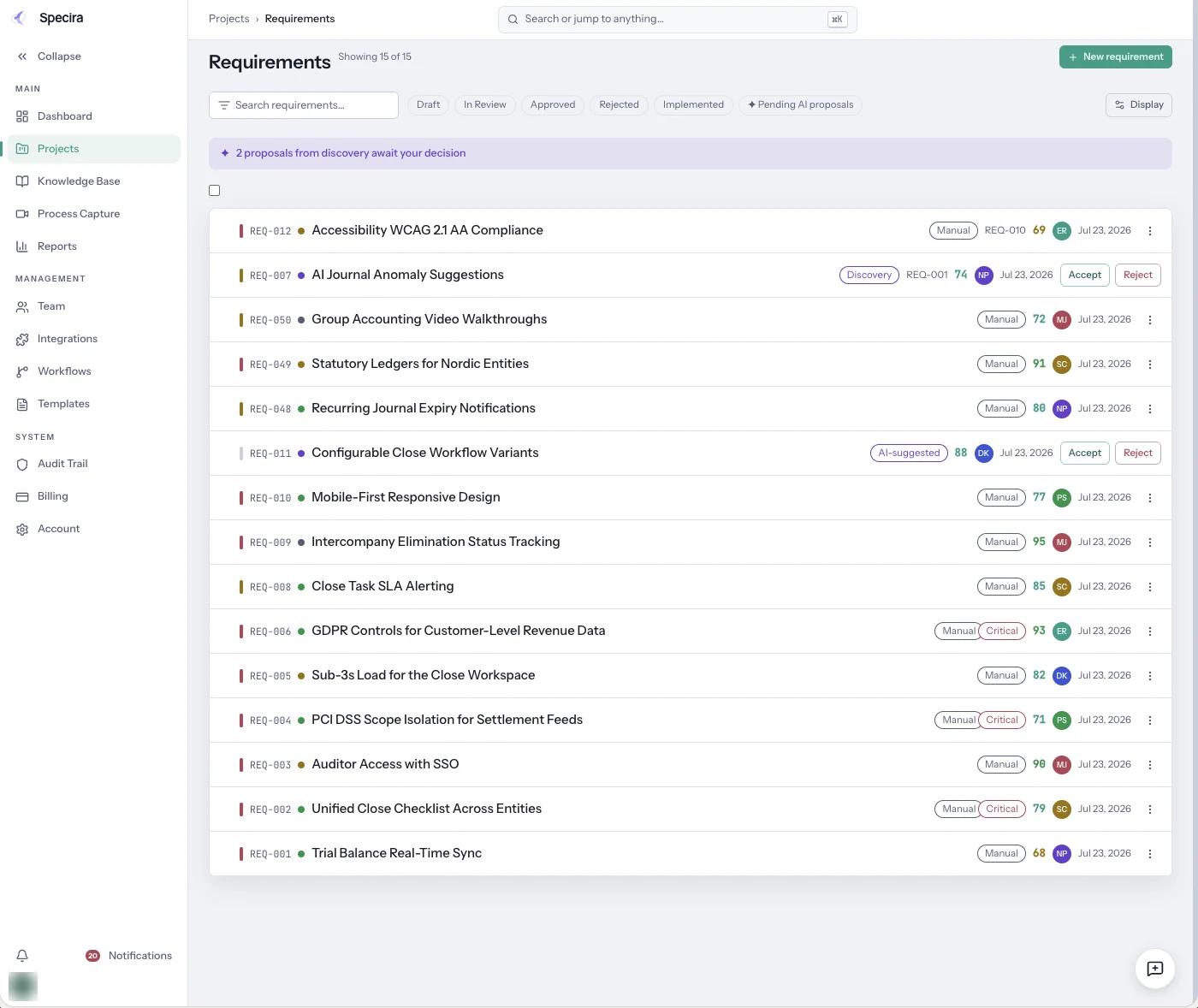
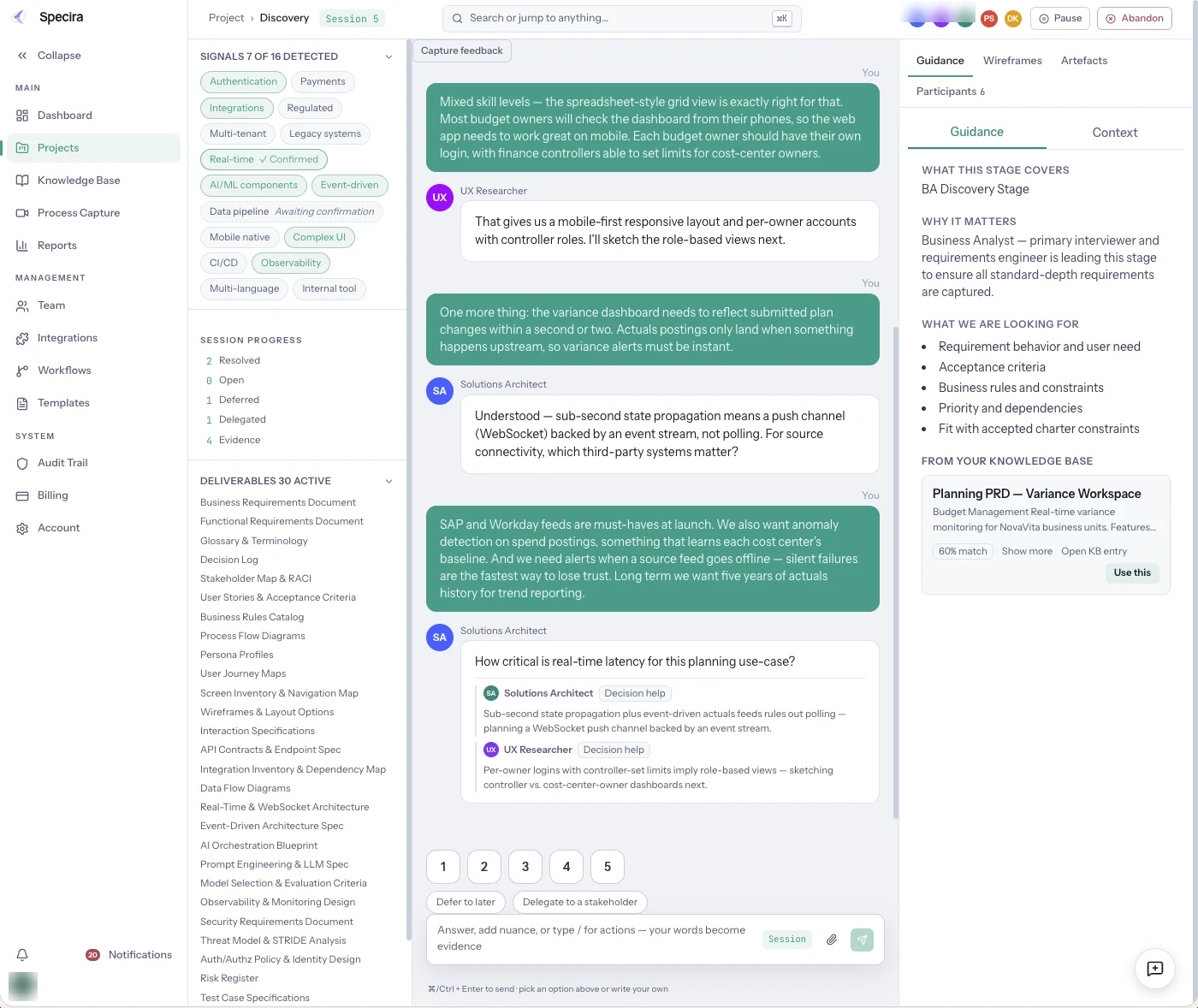
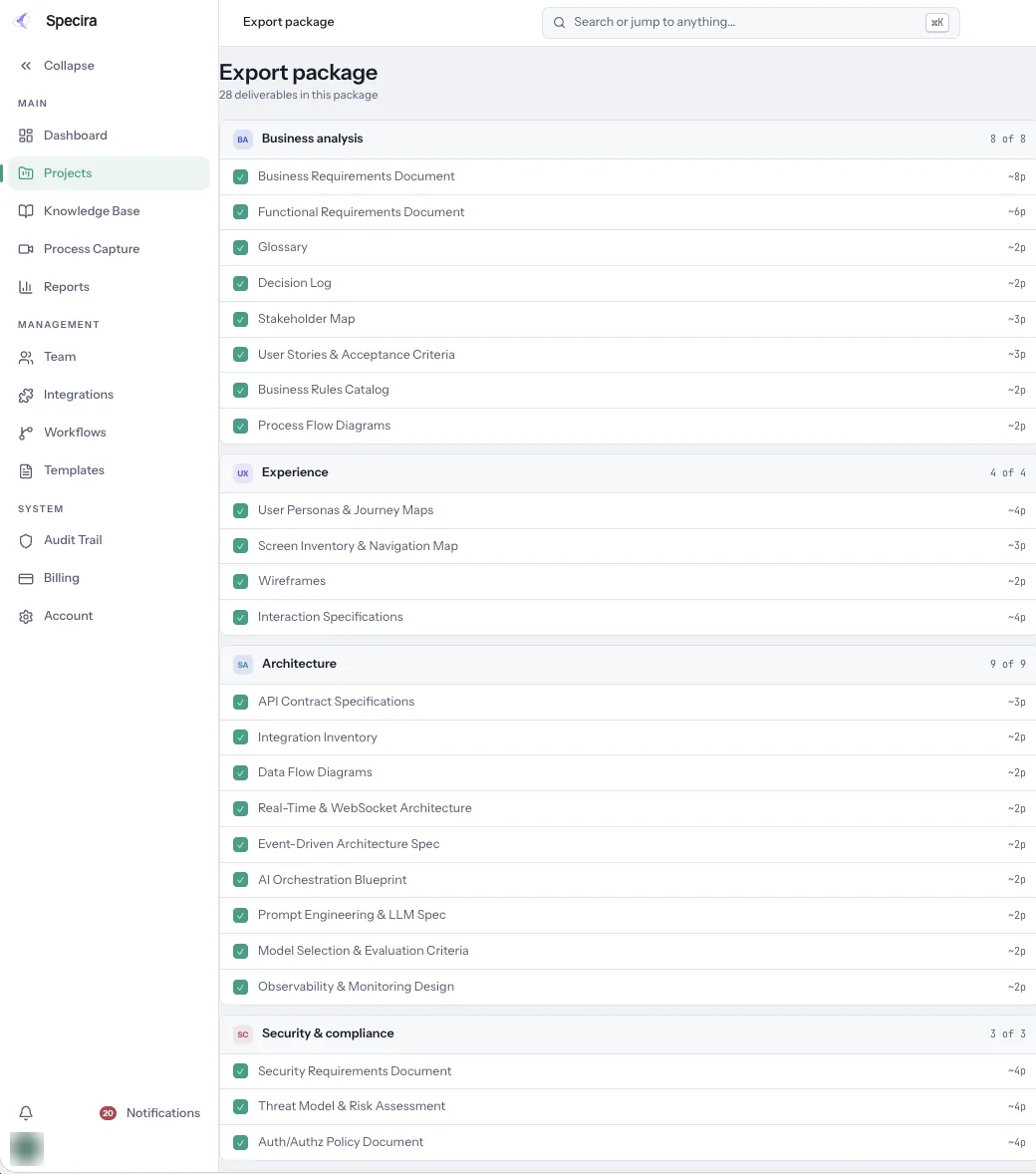
Screens are from a seeded Specira demo workspace; counts and scores are sample data.
Book a demo and watch the Red Team Critic turn your architecture decisions into a test strategy with gates your team will actually enforce.
Book a Demo